
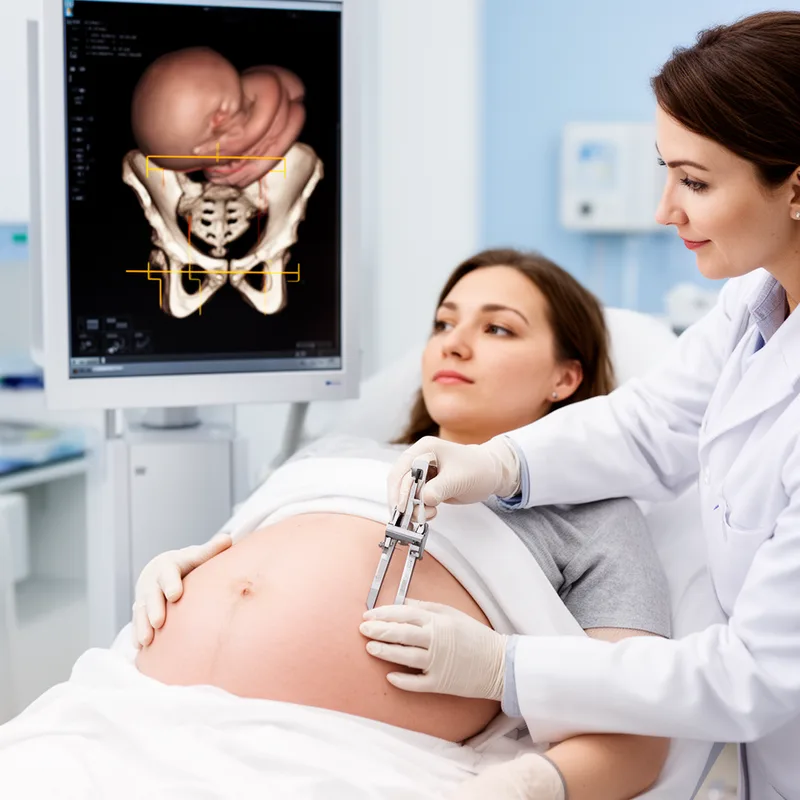
pelvimetry
- noun
- /ˌpɛlˈvɪmətri/
- Specialized
- Pelvimetry is often performed in late pregnancy to assess the likelihood of a successful vaginal delivery.
Examples
-
The midwife explained that pelvimetry helps assess the size of the pelvis for a safe vaginal birth.
-
During her pregnancy, Jane underwent a pelvimetry at the hospital.
-
In cases of suspected cephalopelvic disproportion, pelvimetry can provide critical information for delivery planning.
-
Some doctors use imaging techniques for pelvimetry to obtain more accurate measurements of the pelvis.
-
The doctor recommended a pelvimetry to evaluate the birth canal.
-
Many expectant mothers receive pelvimetry to determine the safest delivery method for their baby.
-
After the pelvimetry, the doctor discussed the potential for a natural birth with the patient.
Surface Forms
Morphology
pelvimetry = pelvis (semi-transparent) = pelvi + metry
Derived from 'pelvis' using the combining stem 'pelvi-' plus the technical suffix '-metry', so the meaning is predictable but the altered stem and medical terminology reduce immediate recognizability for learners.
Etymology
Pelvimetry comes from pelvis, a Latin word meaning 'basin', and the ending -metry, which means 'measure' and is the same idea as in geometry. So pelvimetry literally means 'measuring the basin' and today it refers to measuring a woman's pelvis to see if she can give birth vaginally.

