
pellicle


 1
9.9
- noun
- /ˈpɛlɪkəl/
- Specialized
- As the mass grew larger, the microfibrils of extracellular cellulose entrapped bacterial cells and formed a "pellicle," a structure thought to aid the growth and survival of the microorganism.
- organic pellicles
Examples
-
This coarse material originally may have served as nuclei upon which subcolonies of bacteria produced numerous individual pellicles.
Academic text (1993) -
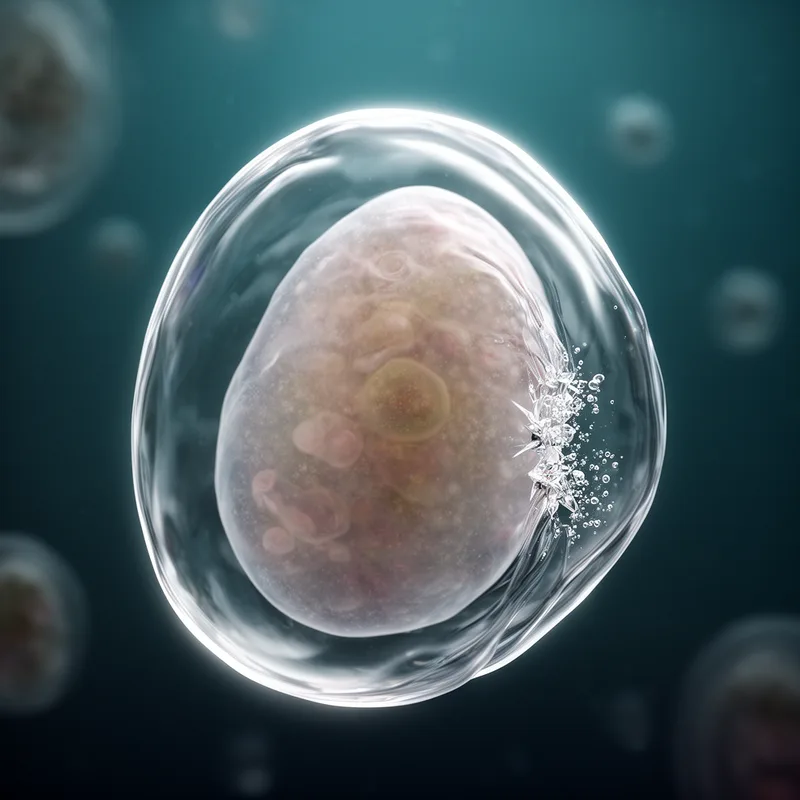
The pellicle surrounding the protozoan protects it from harmful environmental factors.
-
Natural pellicles are eaten in some societies, and when carefully grown, they provide unique products for medicine and industry.
Academic text (1993) -
Scientists observed that the pellicle of the microorganism helps it maintain its shape in varying conditions.
-
A thin pellicle forms on the surface of the liquid, acting as a barrier to contaminants.
Surface Forms
Etymology
Pellicle comes from the Latin pellis, meaning 'skin', with a form that suggests a small or thin skin. So, think of a pellicle as a tiny 'skin' or thin covering that protects and keeps the shape of certain microorganisms.