
pedogenesis
- noun
- /ˌpɛdəˈdʒɛnɪsɪs/
- Specialized
- The study of pedogenesis helps scientists understand how different soil types develop over time in various ecosystems.
- pedogenesis models
Examples
-
Yet there is no theoretical framework that explicitly links the plant-fungal symbiosis to the soil-forming processes that are central to models of pedogenesis.
Academic text (2006) -
Models of pedogenesis and soil organic matter dynamics capture these dynamics, but these models traditionally focus on the physical and chemical components, without implicit references to biota (Six et al. 2000). Modified from Jastrow and Miller (1998).
Academic text (2006) -
Pedogenesis models.
Academic text (2006) -
Mycorrhizal interactions and pedogenesis.
Academic text (2006) -
A new generation of pedogenesis models of aggregate turnover should include biota and capture the four processes shown in this diagram: (1)
Academic text (2006) -
The linkage we envision would incorporate estimates of fungal biomass from dynamic trophic models into a dynamic version of pedogenesis models.
Academic text (2006) -
Understanding pedogenesis is essential for improving agricultural practices and maintaining soil health.
-
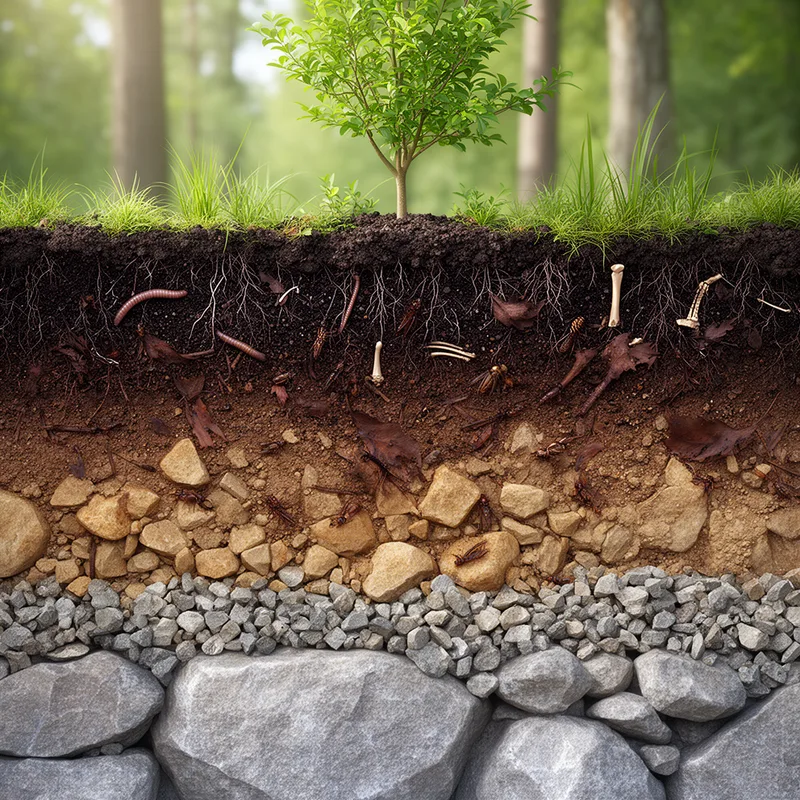
Pedogenesis is a complex process involving physical, chemical, and biological factors that contribute to soil formation.
Surface Forms
Morphology
Etymology
The word pedogenesis in this sense comes from the Greek word pedon meaning 'soil' and the part -genesis meaning 'creation'. So it literally means 'soil creation' and describes the process of how soil forms and develops.

