
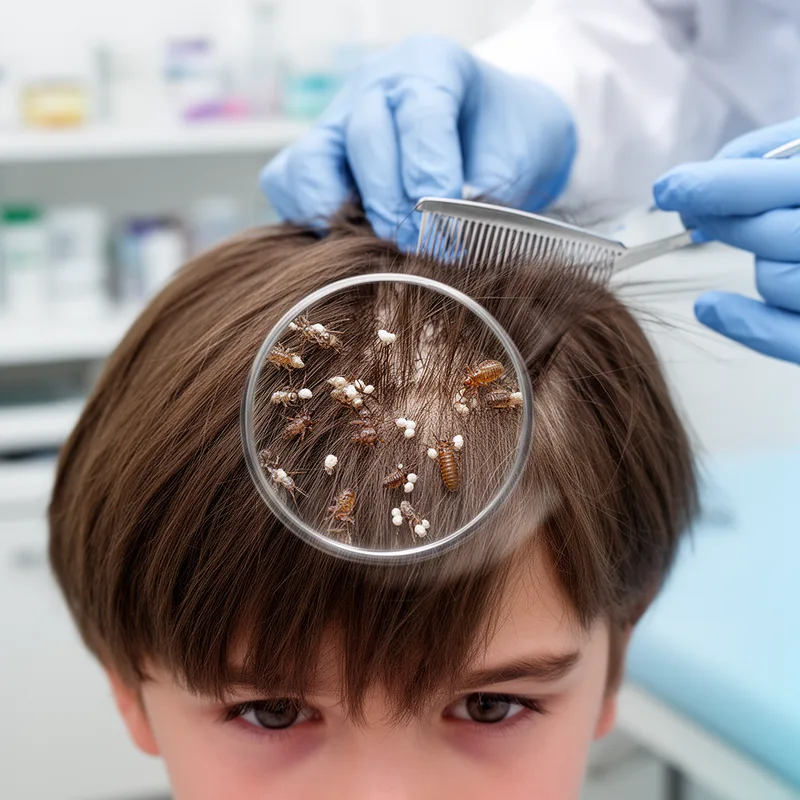
pediculosis capitis
- noun
- /ˌpɛdɪˈkjuːloʊsɪs ˈkæpɪtɪs/
- Specialized
- The doctor diagnosed her with pediculosis capitis after examining her scalp.
Examples
-
The school nurse confirmed that the child had pediculosis capitis after a careful examination.
-
Several students were treated for pediculosis capitis during the recent outbreak at the primary school.
-
Proper hygiene and regular hair checks can help prevent pediculosis capitis among children.
-
Many children suffer from pediculosis capitis during the school year.
-
The school nurse confirmed that the child had pediculosis capitis after a careful examination.
-
Several students were treated for pediculosis capitis during the recent outbreak at the primary school.
-
Proper hygiene and regular hair checks can help prevent pediculosis capitis among children.
Synonyms

 6
2.5
6
2.5

Small insects that live in hair and make the head itchy
Surface Forms
Morphology
pediculosis + capitis
This is a compositional medical Latin binomial: 'pediculosis' means infestation by lice and 'capitis' is the Latin genitive 'of the head', so together they literally mean infestation of the head/scalp. Therefore, if a learner knows the two constituent meanings the overall meaning is directly derivable, making the expression transparent (although the Latin form is specialized and uncommon at B1).
Etymology
Pediculosis capitis is a medical name from old Latin words: pediculosis comes from 'pediculus' meaning 'louse', a small insect, and capitis means 'of the head'. It literally pictures 'lice on the head', so today it is used to mean an infestation of head lice.