
pedestrianism
- noun
- /pəˈdɛstrɪənɪzəm/
- Archaic
- He became interested in pedestrianism after reading about famous long-distance walkers.
Examples
-
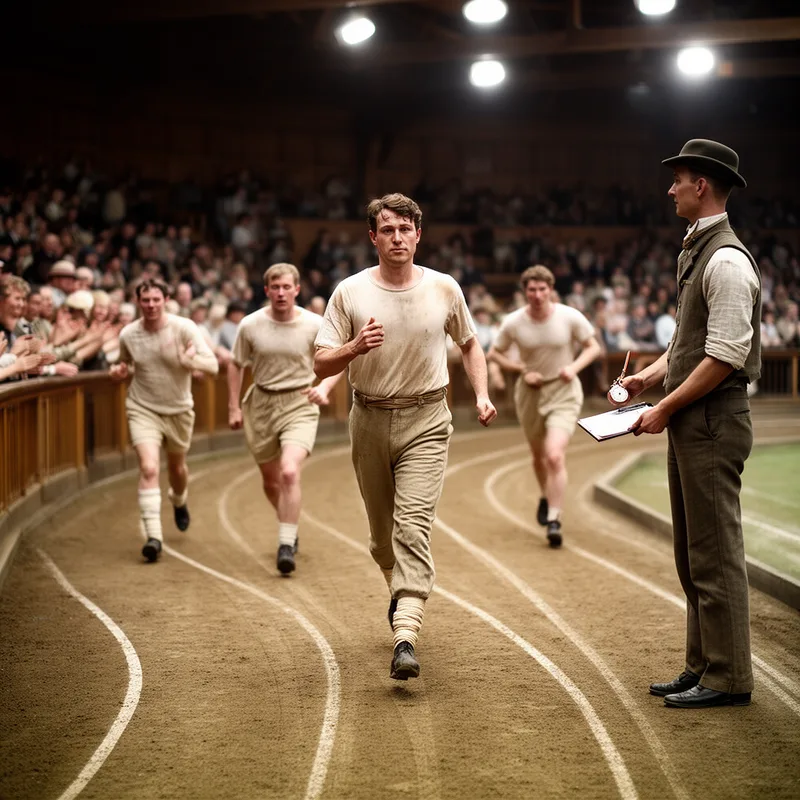
Pedestrianism attracted large crowds in the 1800s, with some races lasting several days.
-
The decline of pedestrianism as a sport coincided with the rise of modern athletics.
-
He excels in pedestrianism and often wins competitions.
-
The pedestrianism event attracted many spectators last year.
-
She trained diligently for months to prepare for the event, showcasing her skills in pedestrianism at the annual race.
-
The competition in pedestrianism attracted athletes from around the world, all eager to prove their endurance and speed.
-
Many believe that pedestrianism is not just a sport but a celebration of human stamina and determination.
Synonyms



 1
4.0
1
4.0
A sport where people walk very fast without running

A fast walk done for exercise that is slower than running
How Competitive
1
4.0

- Archaic
Surface Forms
Morphology
pedestrianism = pedestrian (semi-transparent) = pedestrian + ism
Formally 'pedestrian' + '-ism' denotes a practice, but the sense 'competitive long-distance walking' is a specialized historical/sporting meaning not directly predictable from the base by all learners.
Etymology
Pedestrianism comes from the Latin root ped- (from pes) meaning 'foot', the same root you see in pedal. That's why pedestrianism also names the old sport of competitive walking—people racing while moving on their feet.