

to pay homage
 22
5.8
22
5.8

- phrasal verb
- /peɪ ˈhɒmɪdʒ/
- Formal
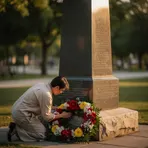
- We gathered at the monument to pay homage to the heroes who fought for our freedom.
- pay homage to tradition
- pay homage to God
- pay homage to the writer
Loading YouTube…
Watch on YouTubeSo it's important that through the experience, we pay homage through our food and through the delivery of the food to the place we're in.
- So it's important that through the experience, we pay homage through our food and through the delivery of the food to the place we're in.
- I hope someday some writer will feel moved to borrow or even pay homage to something I've written.
- The whole house is an an altar paying homage to creativity and my blessings and gifts.
- It was merely to preserve it, to conserve it in its current state, to pay homage to the artifact, to its life, its scars.
- Take the time to just pay homage to the GOAT.
- And I mean, talking about that you recently paid homage to native Brazilian religions in your new music video.
Examples
-
For the last time, we will pay homage to our Pharaoh.
-
And it's a way to pay homage to our soldiers buried here.
-
Everybody has to pay homage to the King.
-
All would pay homage to him.
-
We must pay homage to him.
-
We're going to pay homage to my ancestors.
-
We visit time and time again to embrace our nation's history and to pay homage to its heroes.
Academic text (2006) -
Poet John Keats died there in 1821, and it is now a museum paying homage to the Romantic poets.
Academic text (2010) -
By showing their struggles to achieve ideals on stage, the filmmaker pays homage to their determination.
Academic text (1999) -
And what better way to pay homage to the humble noodle than a cookbook club pick with my culinary partner in crime.
Synonyms
 ∞
1.0
∞
1.0
To admire someone for their actions or qualities
 796
2.3
796
2.3
Show great respect to someone, often in public
 431
1.0
431
1.0
To show respect for someone, often by giving a gift
 201
2.1
201
2.1
To praise someone in public for something they did
 106
3.5
106
3.5
To show respect by a formal gesture or words
 66
5.8
66
5.8
To remember someone or something with a ceremony
 30
7.7
30
7.7
To praise someone publicly in a formal way
 19
5.5
19
5.5
To show great respect to someone in public for their work
 15
7.2
15
7.2
To honor and remember someone in a lasting, formal way
 14
4.6
14
4.6
To have respect for someone because of what they do
 11
7.4
11
7.4
To show great respect for a person or thing
 3
3.9
3
3.9
To make a short speech and drink to honor someone or something

To admire and respect someone for what they have done
Antonyms


How Respectful

Surface Forms
Morphology
The verb 'pay' (to give or show) combined with 'homage' (a public expression of respect) yields a directly compositional meaning: to give or show public respect. The phrase is somewhat formal but follows transparent semantic composition and has clear equivalents in many languages, so a B1 learner who knows the constituents should understand it.
Etymology
Pay homage comes from old ceremonies when a person knelt before a ruler and gave a visible sign of loyalty. In that ceremony the verb pay meant 'to give' and homage was the promise, so today pay homage means 'to show deep respect'.