
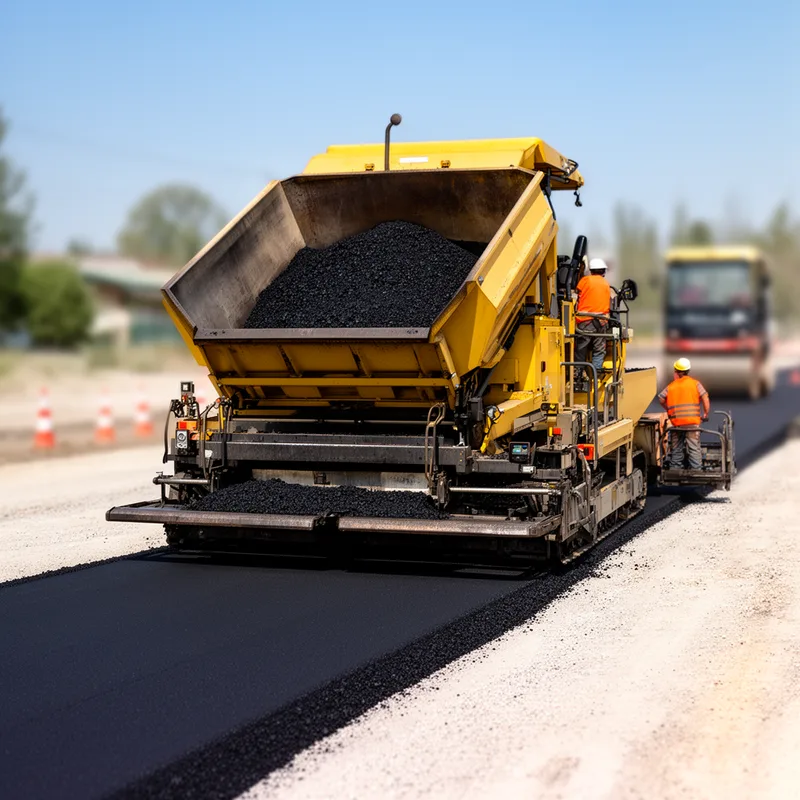
paver


 1
6.0
1
6.0
- noun
- /ˈpeɪvər/
- Specialized
- The construction crew used a paver to lay new asphalt for the busy road.
- road pavers
- concrete pavers
Examples
-
"McConlin won't have trouble with the super or the pavers," I say, "and McConlin will like that just fine."
Fiction book (1990) -
I dare that skunk to get past that paver and the hardware cloth.
-
In addition, how do you know some people don't want to be road pavers, garbage men, and sewer maintenance workers?
Blog text (32) -
The reason pavers are considered a permanent solution is due to the inherent durability of the product and the fact that they are not actually adhered to the existing surface, but instead float above the deck.
Blog text (13) -
For an asphalt highway, pavers, rollers, and dumpers are used to lay down the layers of asphalt.
Academic text (2012) -
He watched the paver skillfully arrange the bricks for the new patio in his backyard.
-
After the heavy rain, the paver was called to repair the damaged sidewalk with fresh concrete.
Synonyms
 1
3.6
1
3.6
A machine that spreads and smooths road or path surfaces
Surface Forms
Morphology
Etymology
Paver comes from the verb pave, which you also see in pavement and which means 'to cover the ground with stone, brick, or asphalt'. So a paver is someone or a machine that 'makes the pavement', which explains why it lays stones or asphalt.