

patina
 7
7.9
7
7.9

- noun
- /pəˈtiːnə/
- Many collectors appreciate the patina of vintage furniture, as it reflects its history and age.
- gives you a patina
Loading YouTube…
Watch on YouTubeNow it's character, it's patina, it's charm.
- Now it's character, it's patina, it's charm.
- It is turning into the most incredible patina.
- It looks like all kind of has that patina hard water staying slash white.
- All those colors and patinas fit better on a person like me, right?
Examples
-
Something in its delicate curves, its rich patina gleaming in the sun, made me feel a kinship with it.
Fiction book (1994) -
Ancient wooden desks sat in rows, covered with the patina of half a century of human hands.
Fiction book (1995) -
Otherwise the oil from the hands can damage the patina.
-
The metal parts wore a patina of age and despair.
Fiction book (2000) -
You'll notice the beautiful patina on the flagstone floor
-
And it is true that most of the houses in Houston did not gleam with the patina of age.
Academic text (2008) -
Yeah, they stain, but the patina you get on one that's well cared for is beautiful.
Blog text (34) -
All were clad in clean overalls; the adults had the walnut-grained patina of those who earn their living outdoors.
Fiction book (2001) -
The antique vase had a stunning patina, showcasing decades of careful preservation.
-
After years of being used, the wooden table developed a rich patina that added to its character.
Synonyms
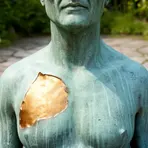
A thin colored layer that forms on metal and other things over time
How Aged

Surface Forms
Etymology
Patina originally meant a 'shallow dish' or 'thin plate' in Latin and Italian. A helpful way to remember the modern meaning is to imagine a thin 'coat' that builds up on wood, metal, or other objects with age or use, which is why an object's aged surface is often called its patina.