
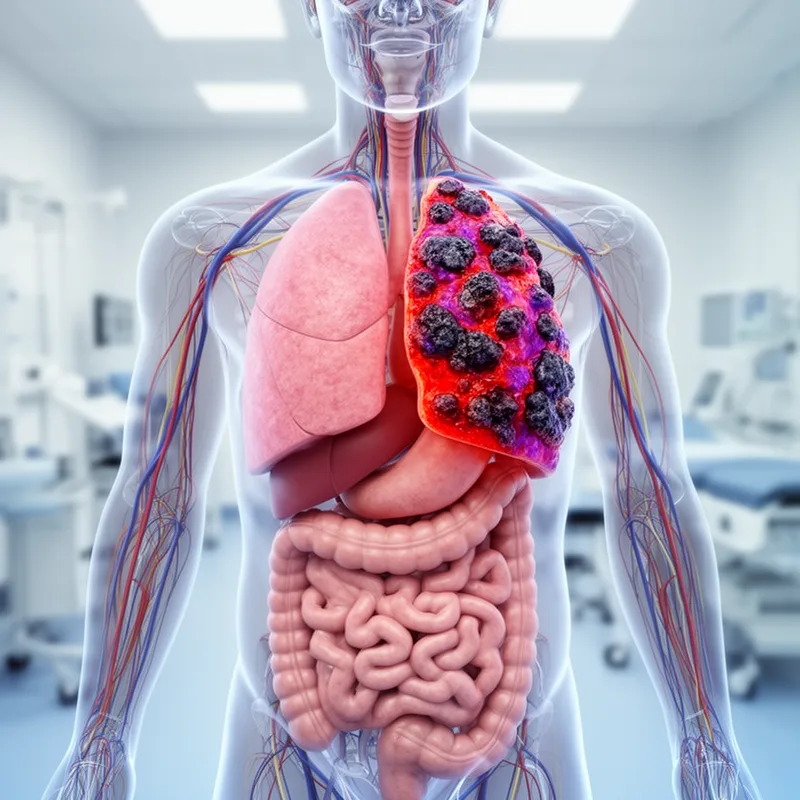
pathological state
- noun
- /ˌpæθəˈlɒdʒɪkəl steɪt/
- Specialized
- We discuss the recently appreciated diversity of neutrophils and argue that this diversity is important for the support of tissue homeostasis but can be co-opted to perpetuate pathological states.
Examples
-
Patients experiencing a pathological state often require specialized treatment to address their underlying conditions.
-
Yet such research increasingly shows pathological states present in the normal population.
Academic text (1995) -
However, there are limitations that should be considered when using this technology, such as motion artifacts and samples with low contrast caused by pathological states (Moritani et al. 2000).
Academic text (2004) -
Their intensity and duration are determined by the prolonged duration or frequent repetition of the pathological state creating the experience, not by brief short-term anomalies in the environment.
Academic text (1999) -
The doctor explained that her frequent headaches were a pathological state resulting from her stress levels.
-
After months of illness, he was finally diagnosed with a pathological state affecting his immune system.
Synonyms

 ∞
2.3
∞
2.3

An illness that harms the body or mind and causes symptoms
 63
6.0
63
6.0
The study of diseases and a disease or other body problem
 53
4.4
53
4.4
A deep moral problem that harms a person or society
How Serious

Surface Forms
Morphology
The noun phrase is compositionally built from 'pathological' (connected with disease) modifying 'state' (a condition), so the overall meaning — a condition caused by disease — is directly derivable from the parts. This adjective+noun pattern is cross-linguistically common and follows standard English composition, making it understandable to a B1 learner who knows both constituent words.
Etymology
Pathological state comes from a simple idea about illness. Pathological comes from a Greek word meaning 'suffering' or 'disease' and state means a 'condition', so the phrase describes a bodily 'condition' caused by disease.