

patent of invention
- noun
- /ˈpætənt əv ɪnˈvɛnʃən/
- Formal
- He received a patent of invention for his groundbreaking design.
Examples
-
His lawyer advised him to apply for a patent of invention before disclosing his idea publicly.
-
The company holds several patents of invention related to renewable energy.
-
After years of hard work, she finally received a patent of invention for her innovative medical device.
-
The firm specializes in securing patents of invention for new pharmaceutical compounds.
-
After years of hard work, she finally received a patent of invention for her innovative medical device.
-
His lawyer advised him to apply for a patent of invention before disclosing his idea publicly.
-
The firm specializes in securing patents of invention for new pharmaceutical compounds.
Synonyms
 282
4.4
282
4.4

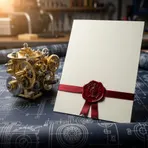
An official document giving the only right to make or sell an invention for some years

An official paper from a monarch or government that gives someone the only right to make something
How Official

Surface Forms
Morphology
The meaning 'an official document granting exclusive rights to an invention' is directly and transparently derived from combining 'patent' (a document granting exclusive rights) + 'of' + 'invention' (a created device or process). The noun + of + noun compositional pattern is common across languages (e.g. Spanish 'patente de invención'), so a B1 learner who knows the constituents would readily infer the MWE meaning.
Etymology
The noun patent of invention comes from a simple idea: long ago a king or government wrote an official paper called a patent that gave one person special control over a new invention. So, a patent of invention today is the official paper that gives someone 'exclusive rights' to make, use, or sell their invention.