
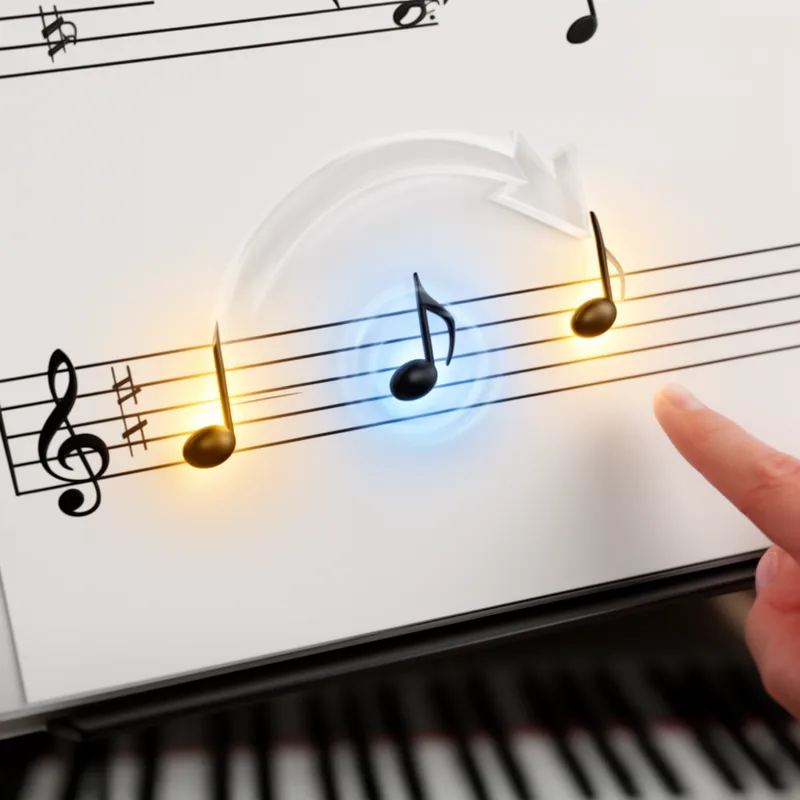
passing tone
- noun
- /ˈpæsɪŋ toʊn/
- Specialized
- This could range from something as simple as including neighbor and passing tones in a melody from the concert repertoire to something as complex as including chromatic pitches and modal variations of a melody.
Loading YouTube…
Watch on YouTubeAnd I hear that I did use one passing tone there.
- And I hear that I did use one passing tone there.
Examples
-
Or, embellish melodies, harmonic parts, and bass lines with upper and lower neighbors and passing tones.
Academic text (1999) -
You have to use the same principles I've been talking about, which is using core tones on strong beats and non chord tones or passing tones on weak beats.
-
Except that the amazing variations on the melody depend so much on their peculiar passing tones - and leading notes.
-
A passing tone adds movement to a melody by connecting two harmonic notes.
-
In music composition, a passing tone is used to create a smooth transition between chords.
-
Composers often incorporate passing tones to enhance the fluidity of their melodic lines.
Synonyms

A small note between two main notes in a melody that connects them smoothly
How Stable


Surface Forms
Morphology
The compound is compositional: 'passing' (moving/passing by) + 'tone' (a musical pitch) readily yields the idea of a tone that passes between other tones, so a B1 learner who knows both words can infer it denotes a transitional or in-between note. Precise technical details about harmonic vs nonharmonic status are specialized, but the basic meaning is directly derivable from the constituents.
Etymology
Passing tone is named for the idea of a small note that 'passes' quickly between two main notes. A passing tone is 'not part of the chord' and helps the melody move smoothly from one chord note to the next.