

pascal


 1
6.4
1
6.4
- noun
- /ˈpæskəl/
- Specialized
- 980 hecto-Pascals and falling.
Examples
-
Our research indicates that the industrial vacuum furnace operates at 30 pascals of pressure.
-
The average sea-level pressure on Earth is about 100,000 pascals.
-
Collision pressure just below 80 pascal, captain.
-
And the man who first made this obvious was the Frenchman Pascal, who has the pressure unit named after him.
-
The SI name for it is the Pascal, named after the French scientist who made a fundamental breakthrough in understanding pressure.
-
The elastic modulus should be lower than 10^5 pascals.
Academic text (1999) -
Alexander Jafari, a marketing executive for Vector Foiltec in the U.S., said inflation is maintained at 200 to 230 pascals, or just over 4 pounds per square foot.
Academic text (2010) -
At the onset of the industrial revolution in the 18th century, global pCO2, or partial pressure of atmospheric carbon dioxide (CO2), began rising from approximately 27 pascals (Pa) to its current value of 37 Pa.
Academic text (2004) -
The hyperloop tube is designed to be depressurized to around 100 pascals, creating a low-pressure environment.
Synonyms
 2
8.0
2
8.0
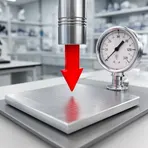
A unit that measures pressure equal to one newton per square meter
Compounds


How High
- Specialized
12
6.8

- Specialized
20
7.3
- Specialized
3
6.0
- Specialized
1
6.4
Surface Forms
Etymology
Pascal is named after the French scientist Blaise Pascal, who studied how liquids and air push on things. So a pascal measures that push — 'force per area' — and is used as the unit of pressure.