
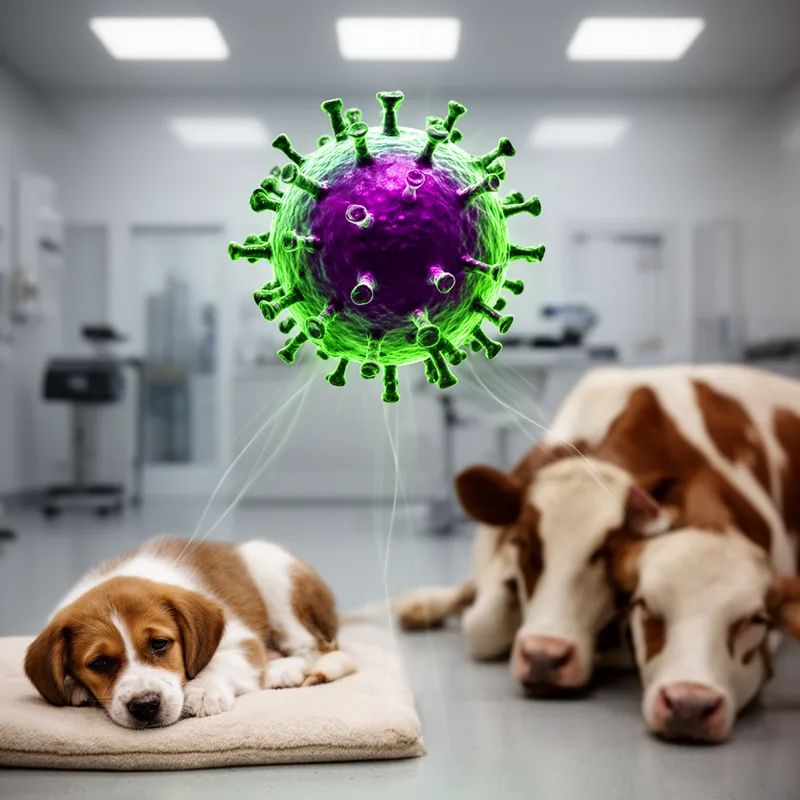
parvovirus
 1
9.1

- noun
- /ˈpɑrvəˌvaɪrəs/
- Specialized
- Veterinarians recommend that pets are vaccinated against parvovirus to prevent this potentially fatal disease.
- parvovirus B19
- parvovirus 4
Examples
-
Several important animal diseases, such as distemper, calicivirus, or parvovirus, may be present in situations with dense concentrations of animals. Care must be taken to avoid transferring potentially contaminated materials from a hoarding site to animals in a different location.
Academic text (2010) -
The first one was erythrocytic aplastic crisis due to infection with parvovirus B19 (PVB19, the virus mentioned above), of course!
Blog text (29) -
Parvovirus is dangerous for young dogs but rarely kills adults.
Academic text (1998) -
Luckily, there have been "no other reports other than the one last week" of parvovirus, said Ridgefield Animal Control Officer David Coles.
Blog text (25) -
Parvovirus was detected in the blood of one fetus, but was not deemed clinically relevant.
Academic text (2003) -
The litters we observed were slightly smaller than wild dog litters in other populations, suggesting that parvovirus might be taking its toll on pups.
Academic text (1998) -
For example, a newly discovered parvovirus-circovirus recombinant was implicated in 2013 as a cause of seronegative hepatitis.
Academic text (2013) -
Human parvovirus 4 (PARV4), also known as partetravirus, was identified in 2005 from the plasma of an intravenous drug user (IDU).
Academic text (2012) -
Canine parvovirus is a serious illness that primarily affects puppies, causing severe gastrointestinal issues.
-
If a dog contracts parvovirus, immediate veterinary attention is required to address dehydration and other complications.
Synonyms
 3
9.9
A virus that makes dogs and cattle very sick but not humans
Surface Forms
Morphology
Etymology
The word parvovirus comes from the Latin words parvus 'small' and virus 'poison' or 'germ'. So, it means a 'small virus', which fits because this tiny virus causes disease in animals.