
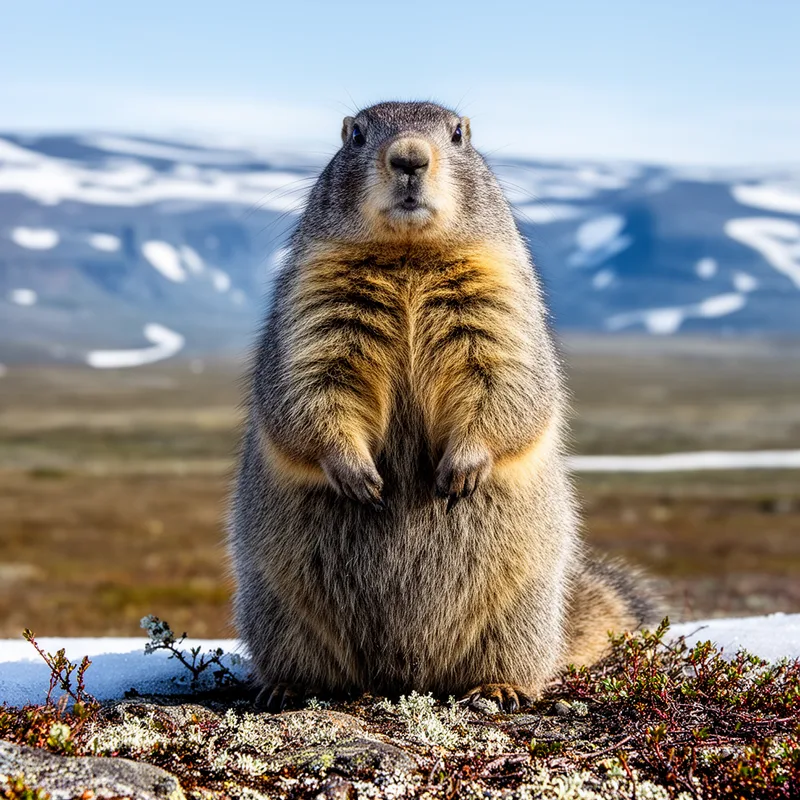
parka squirrel
- noun
- /ˈpɑrkə ˈskwɪrəl/
- US
- The thick fur of the parka squirrel helps it survive in frigid temperatures.
Examples
-
The parka squirrel is well adapted to cold climates.
-
Researchers tracked several parka squirrels to study their hibernation patterns.
-
During the summer, parka squirrels can often be seen foraging above the tree line.
-
I saw a parka squirrel in the snowy forest.
-
The parka squirrel forages for food in the cold tundra during the summer months.
-
In the winter, the thick fur of the parka squirrel helps it survive the frigid temperatures.
-
You can often spot a parka squirrel digging for roots beneath the snow-covered ground.
Synonyms
A large ground squirrel that lives in Alaska and northern Canada

A large squirrel that lives in burrows in far northern North America and hibernates for many months
Surface Forms
Morphology
parka + squirrel
Knowing 'parka' (a warm, fur-lined coat) and 'squirrel', a B1 learner can plausibly infer 'parka squirrel' as a squirrel with a coat-like or very thick fur adapted to cold, which matches the definition. The relation is metaphorical (coat → thick fur) and somewhat lexicalized as a species label, so the meaning is inferable but not strictly literal or fully predictable.
Etymology
Parka squirrel comes from the animal's very thick fur that looks like a small parka or heavy 'coat', so people named the large northern squirrel after that warm covering. That's why the name means a big ground squirrel that can 'survive' cold weather.

