
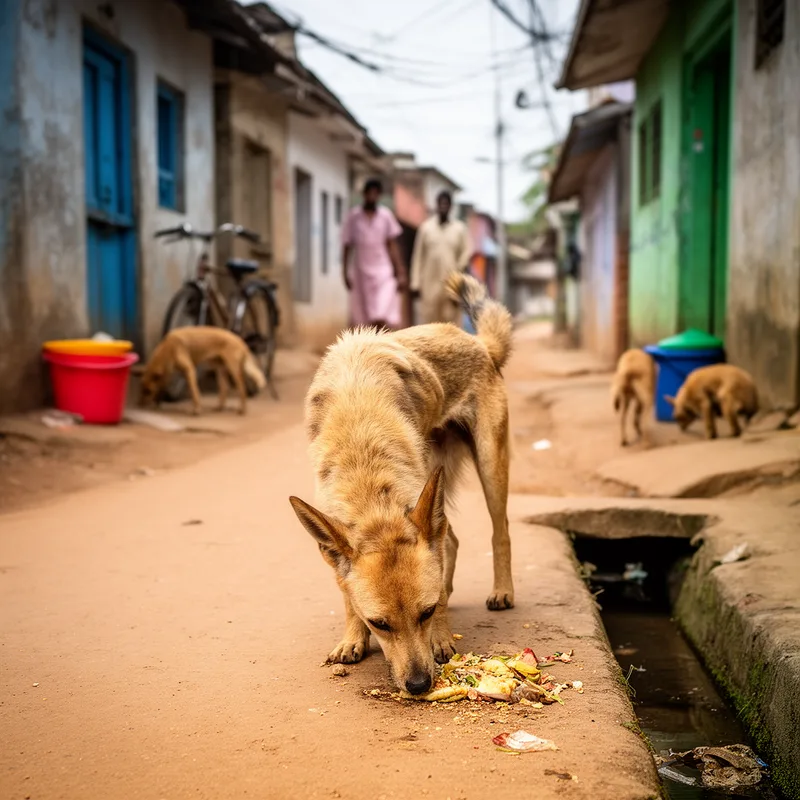
pariah dog
- noun
- /pəˈraɪə dɔɡ/
- UK
- In India, it is common to see pariah dogs wandering near the streets and alleyways.
Examples
-
The pariah dog wandered through the streets of Delhi.
-
The local veterinary team set up a clinic to vaccinate pariah dogs against rabies.
-
Pariah dogs can often be seen scavenging in Indian villages.
-
Some animal lovers have begun adopting pariah dogs as pets.
-
Many pariah dogs can be seen scavenging for food.
-
The pariah dogs roam freely in the village, scavenging for food and shelter.
-
Many locals regard pariah dogs as part of the landscape, often feeding them scraps.
Synonyms

A dog with no owner that lives near people often in villages

A dog with no owner that lives near villages, often in India
How Domesticated


Surface Forms
Morphology
The compound is partly compositional: combining 'pariah' (an outcast) with 'dog' yields the idea of an outcast or stray dog, so a learner who knows both words can infer the core meaning. However, the phrase has a more specific, regionally used zoological sense (semi‑wild, ownerless village dogs) and 'pariah' is relatively formal/rare, so the precise ecological and cultural nuance is not fully predictable.
Etymology
Pariah dog comes from the word pariah, used in India for someone who lived outside the usual groups. Dogs that roamed villages without owners were called pariah dogs, so the phrase now means 'an ownerless, semi-wild dog'.