
pareu


 1
9.9
- noun
- /pɑːˈreɪuː/
- Australian
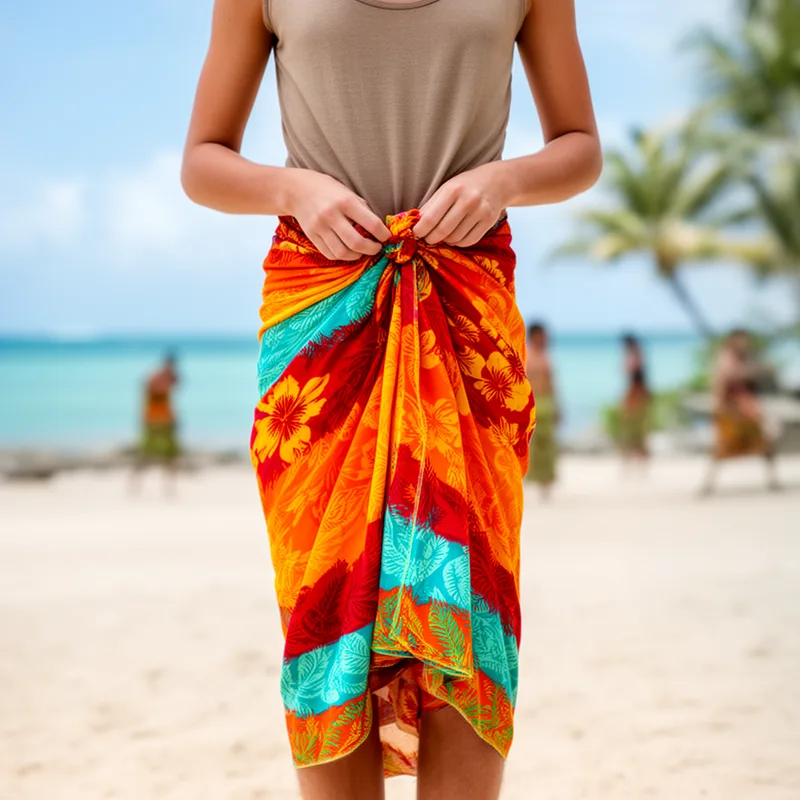
- For example, women wear a T-shirt and a pareu (a roughly one-by-two meter length of dyed or printed cloth) for dance rehearsal.
- wearing a pareu
- dressed in pareu
Examples
-
During the festival, the dancers twirled gracefully in their colorful pareu, celebrating their heritage.
-
Pareu are also worn as aprons and are used to carry parcels.
Academic text (1994) -
However, garments of European origin are worn with pareu in many of these settings.
Academic text (1994) -
Men also use the pareu as a means of demonstrating their ties to Maohi tradition.
Academic text (1994) -
Pareu are not only associated with dancing or special occasions; most women in the village, and some men, don them following their evening baths.
Academic text (1994) -
Invariably, these women tied pareu about their waists before beginning to dance.
Academic text (1994) -
Women who have bathed and dressed in pareu do not change for vespers.
Academic text (1994) -
Women cleaning the church grounds and sanctuary, or arranging flowers for the weekly services, may wear pareu while performing these tasks.
Academic text (1994) -
At the time, he was wearing a pareu about his waist and a hei (garland) on his head.
Academic text (1994) -
Notably, people often wear pareu to weeknight evening meetings that include dance rehearsals—the dance, of course, being traditional Maohi dance.
Academic text (1994)
Synonyms
 378
1.0
A piece of clothing that hangs from the waist and covers the legs
 7
4.6
A long piece of cloth you wrap around your body to make a loose skirt or dress
 1
9.9
A brightly colored cloth worn wrapped around the body, often in West Africa
Surface Forms
Etymology
The word pareu comes from Tahitian in the Pacific and originally named a cloth people 'wrap' around the body, and it is often spelled pareo. That's why today a pareu means a colorful wraparound skirt or cloth worn in Tahiti.