
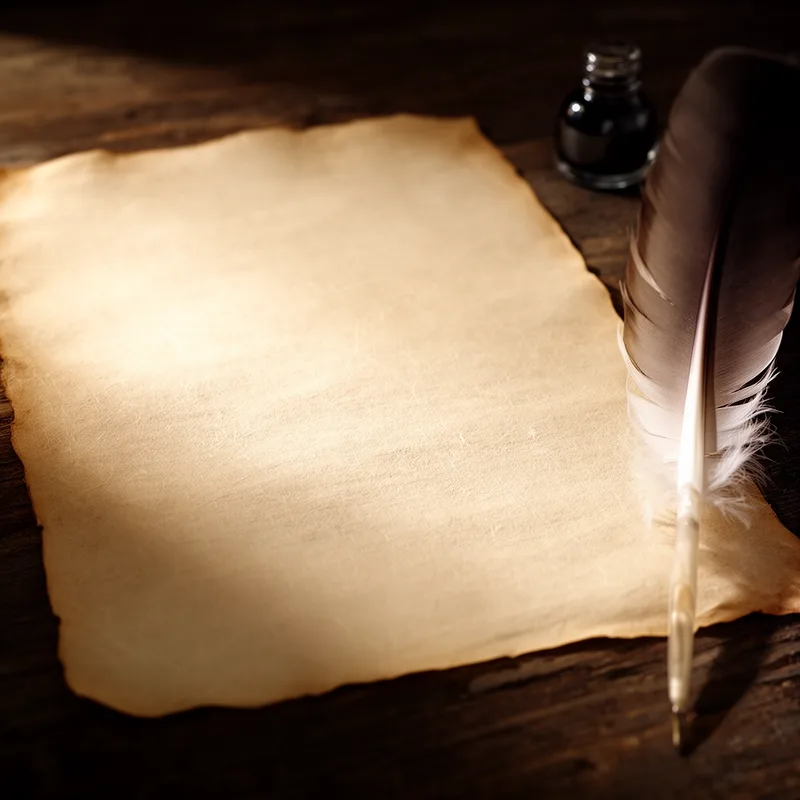
parchment
 8
8.4
8
8.4

- noun
- /ˈpɑːrʧmənt/
- The ancient scroll was carefully written on durable parchment that had survived for centuries.
- parchment paintings
- parchment scroll
Loading YouTube…
Watch on YouTubeThey also found a piece of sheepskin parchment.
- They also found a piece of sheepskin parchment.
- Although I'm sure if I showed you some Talmudic excerpts in in like on some parchment, your dopamine would go through the roof.
- And accordingly, along with this change to parchment is a change from the scroll to the codex.
- So stuff like tombstones or graffiti or just something that survives on a scrap of parchment that records a financial transaction.
- They, they did this in order to, you could say save vellum or parchment or paper or, you know, whatever it happened to be.
- So the the use of skins to make clothing not and even to make paper, let's say you know, parchment.
Examples
-
These Acts were made from parchment, which is specially treated dried skin from animals such as goats, calves and sheep.
-
I write with ink and parchment.
-
This piece of parchment is the only clue we found among the ruins.
-
The lean man took a step forward and read rapidly from a parchment.
Fiction book (1993) -
That's the parchment he wrote on.
-
Once the parchment scroll was filled with writings, it was washed to be used again for future writings.
Academic text (2009) -
An eleventh-century letter, written on parchment, rolled into a cylinder and tied with thongs.
Fiction book (1990) -
Shakespeare labored with quill and parchment for his actors at the Globe.
Blog text (16) -
Written on fine parchment in a tidy, rustic capital script, the codex had hundreds of illustrations, some occupying an entire page.
-
The teacher handed out a certificate printed on elegant parchment for all the students to receive.
Synonyms
 1
9.9
1
9.9
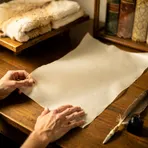
A smooth writing surface made from young animal skin like calf or lamb
 1
5.6
1
5.6
Prepared sheep or goat hide used for writing before paper

Prepared skin from a sheep or young goat that people use for writing old books
How Durable

Surface Forms
Etymology
Parchment comes from Latin pergamena, named after the city Pergamon, where craftsmen prepared thin sheets of sheep or goat skin for writing. So parchment originally meant the prepared animal skin used for writing, which is why many old books and documents are on parchment.