
paravertebral
- adjective
- /ˌpærəˈvɜrtəbrəl/
- Specialized
- The paravertebral muscles play a crucial role in stabilizing the spine during movement.
Examples
-
The most common complications in the patients were: buttock pain, paravertebral muscle spasms, lower limb paresthesia, and gastrosoleus muscle pain, respectively.
Academic text (2007) -
It is the rotation that is responsible for the noticeable prominence of the scapula, ribs, and paravertebral muscles in many patients.
Academic text (2002) -
The amount of epidural and paravertebral infection is also more easily noted on CT.
Academic text (2004) -
An extensive review of research relating lumbar paravertebral EMG activity to chronic LBP revealed no consistent evidence of elevated absolute levels of EMG activity, thereby supporting the need for further investigation and development of improved assessment methods (15).
Academic text (1997) -
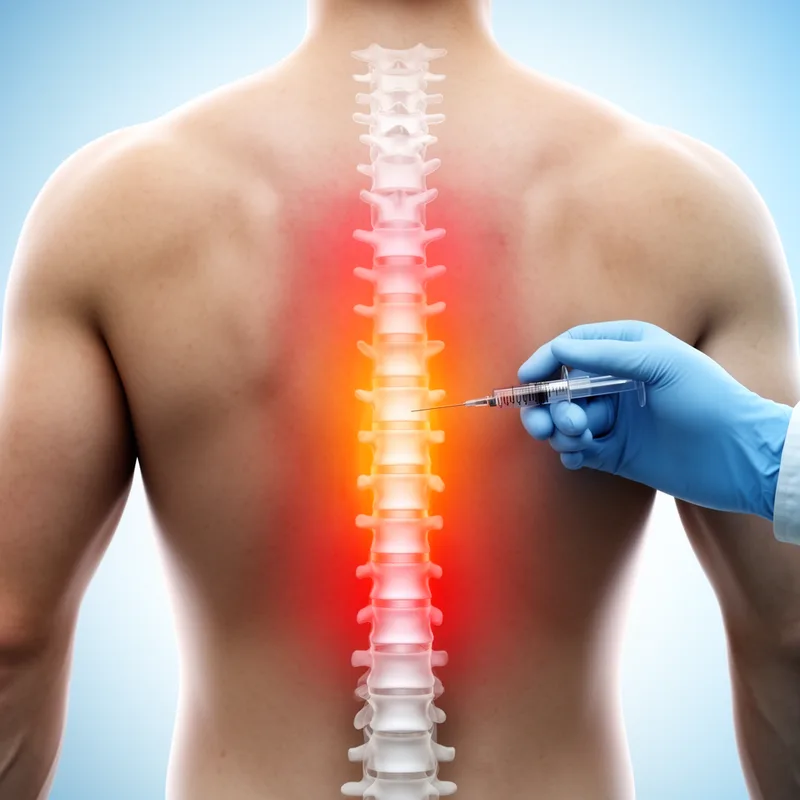
Doctors often examine the paravertebral area to assess for any abnormalities related to back pain.
-
Injuries to the paravertebral region can lead to significant discomfort and mobility issues.
How Close


Surface Forms
Morphology
Etymology
Paravertebral comes from the parts para- 'beside' and vertebra 'spine' or 'backbone', with para- acting like it does in parallel to mean 'side by side'. So, paravertebral describes something that is next to the spine.