
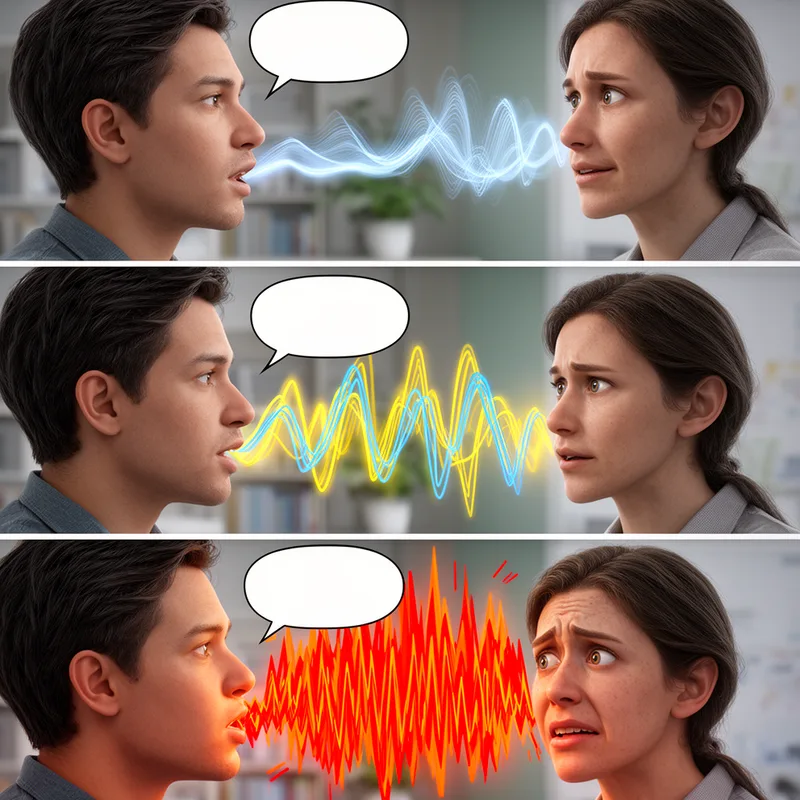
paralinguistic communication
- noun
- /ˌpærəˌlɪŋɡwɪstɪk kəˌmjunɪˈkeɪʃən/
- Specialized
- Her paralinguistic communication made it clear she was upset, even though she said nothing directly.
Examples
-
Teachers pay attention to both verbal and paralinguistic communication to understand their students' feelings.
-
In cross-cultural situations, paralinguistic communication can easily be misunderstood.
-
Her paralinguistic communication was clear through her tone.
-
Can you identify the paralinguistic communication in that speech?
-
Her paralinguistic communication clearly showed her frustration, even though her words were polite.
-
In face-to-face interactions, paralinguistic communication plays a crucial role in conveying emotions.
-
During negotiations, effective paralinguistic communication helped both parties understand the underlying tensions.
Synonyms

The way someone says words using tone, pitch, and speed to show feeling
How Nonverbal


Surface Forms
Morphology
paralinguistic + communication
The phrase combines 'paralinguistic' (concerning nonverbal aspects) with 'communication' (exchange of information), so the meaning 'communication via nonverbal cues' is directly derivable from the constituents. This compositional structure is straightforward and parallels how many languages label nonverbal communication, so a learner who knows both words would readily understand the term.
Etymology
Paralinguistic communication may come from the idea that para means 'beside' and linguistic means 'language', so it is the small signs that sit beside words — like tone, pitch, and speed of speech. That's why it means 'communication shown by how you say something rather than by the words themselves'.