
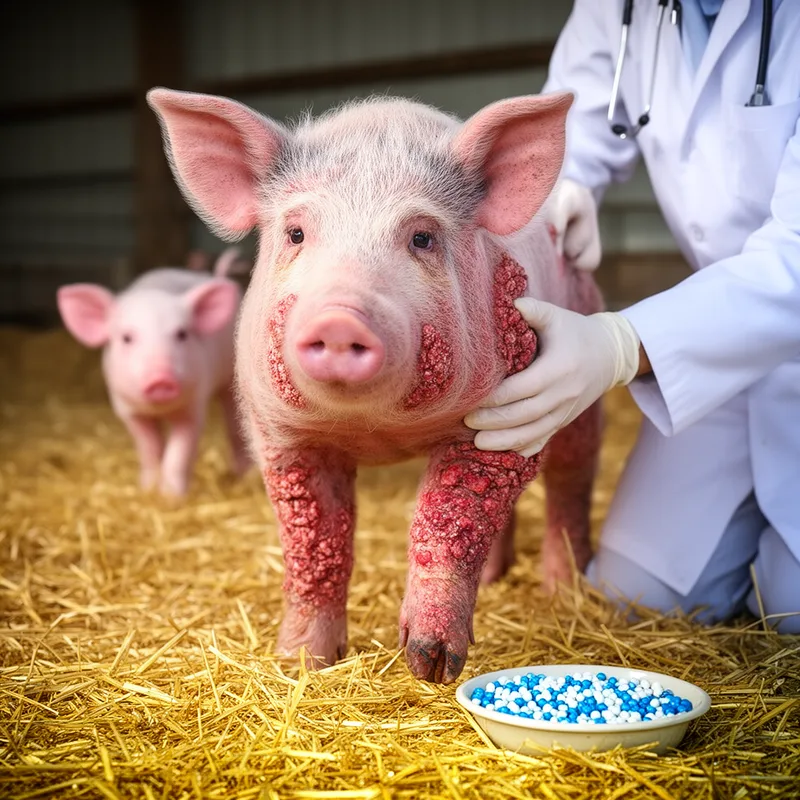
parakeratosis
- noun
- /ˌpærəˌkɛrəˈtoʊsɪs/
- Specialized
- The veterinarian diagnosed the pig with parakeratosis after noticing its rough, scaly skin.
Examples
-
Proper nutrition can help prevent parakeratosis in young farm animals.
-
Farmers learned to recognize the signs of parakeratosis to treat their livestock early.
-
The veterinarian diagnosed the pig with parakeratosis.
-
Farmers should be aware of parakeratosis in their livestock.
-
The veterinarian diagnosed the pig with parakeratosis after noticing its rough, scaly skin.
-
Proper nutrition can help prevent parakeratosis in young farm animals.
-
Farmers learned to recognize the signs of parakeratosis to treat their livestock early.
Surface Forms
Morphology
parakeratosis = keratosis (opaque) = para + kerat + osis
The word is built on the technical base 'keratosis', but the veterinary disease sense is not readily predictable from the parts for an average learner.
Etymology
Parakeratosis comes from parts that help explain the disease: para- meaning 'abnormal', kerat- meaning 'horn' or 'hard skin' and seen in the word keratin, and -osis meaning 'condition'. So parakeratosis is an 'abnormal hard-skin condition', which fits the thick, scaly, inflamed skin often seen in pigs with a zinc deficiency.

