
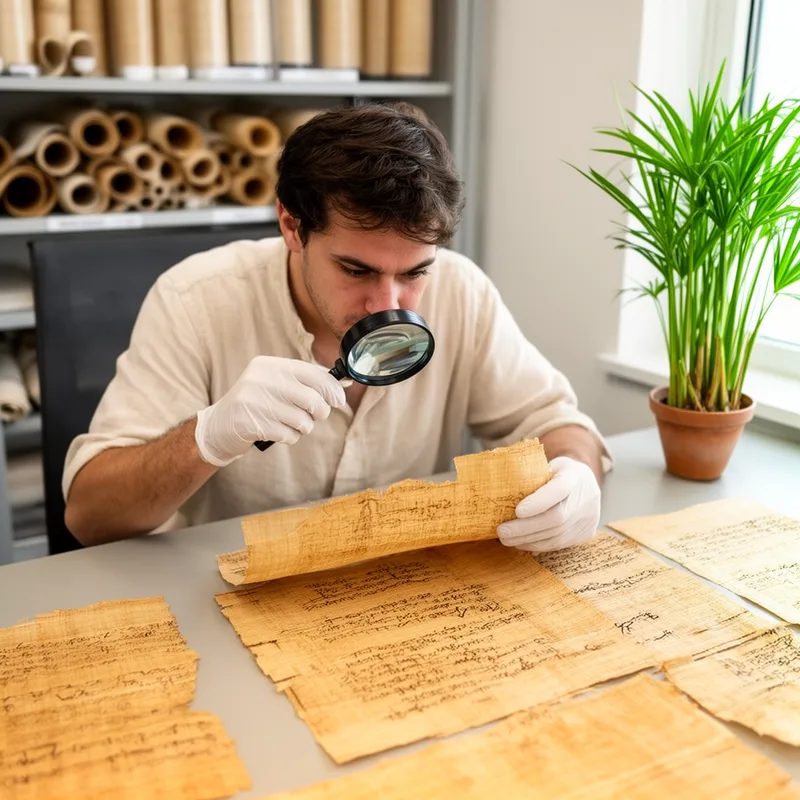
papyrology
- noun
- /ˌpæpəˈrɑlədʒi/
- Specialized
- The study of papyrology allows researchers to understand the historical context of ancient texts written on papyrus.
Examples
-
On a more popular level, his Manuscripts of the Greek Bible (Oxford, 1981) is an album of photographs of manuscripts with his explanatory notes that introduced the disciplines of palaeography, codicology, and papyrology to a public who previously may have thought such subjects belonged to hospital wards.
Academic text (2007) -
OK, just a little papyrology lesson for you.
-
"The papyri give us particular and historic information that cannot be found elsewhere," says Claudio Gallazzi, professor of papyrology at Milan University, who has led the international effort here since 1988.
Academic text (2007) -
She decided to pursue papyrology after developing a fascination with ancient documents found in Egypt.
-
An expert in papyrology provided valuable insights into the daily lives of people in the ancient Mediterranean world.
Surface Forms
Morphology
Etymology
Papyrology comes from papyrus, the plant used as early paper, and the ending -logy, meaning 'study of'. Think of paper, which comes from the same root, to help you remember it. So papyrology is the study of ancient texts and documents written on papyrus.

