
pangolin
 1
9.7
1
9.7

- noun
- /ˈpæŋɡəlɪn/
- According to John Picton, among the Ekpeye, the pangolin was described as the "blacksmith of the animal world," and at its appearance at Egbukere, an all-purpose cultural celebration, I was told that everyone begins to imitate the actions of the smith.
- pangolin scales
Examples
-
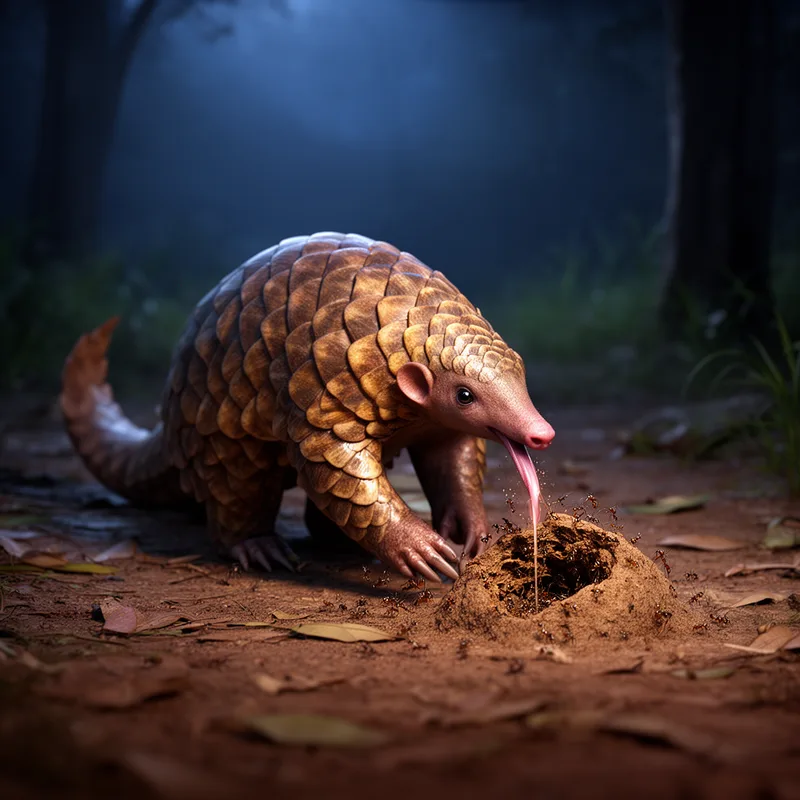
The pangolin uses its long snout to dig into ant hills and find food.
-
Pangolin scales are burned by Tabwa and other people in central Africa to cause lions and other dangerous animals to flee.
Academic text (1990) -
Hunting had seriously depleted only the slow, tasty giant pangolin (a medium-sized mammal).
Academic text (1996) -
Seemingly sharing traits with both reptiles and mammals, and seen in many cultures as something of a primordial anomaly, the pangolin provides a provocative subject for African thought.
Academic text (2003) -
Use of the pangolin as an activating agent for the magical bundle of a diviner's headdress keeps sorcerers at bay during a séance.
Academic text (1990) -
Due to poaching, many pangolins are now classified as endangered species.
-
In the dense forests of Africa, the pangolin forages for termites at night.
Synonyms
A mammal with hard scales and a long nose that eats ants and termites
Surface Forms
Etymology
The word pangolin comes from the Malay word pengguling, which means 'one who rolls up' and comes from gulung meaning 'to roll'. Pangolins curl into a tight ball when they are scared, so the name reminds you of that habit.