
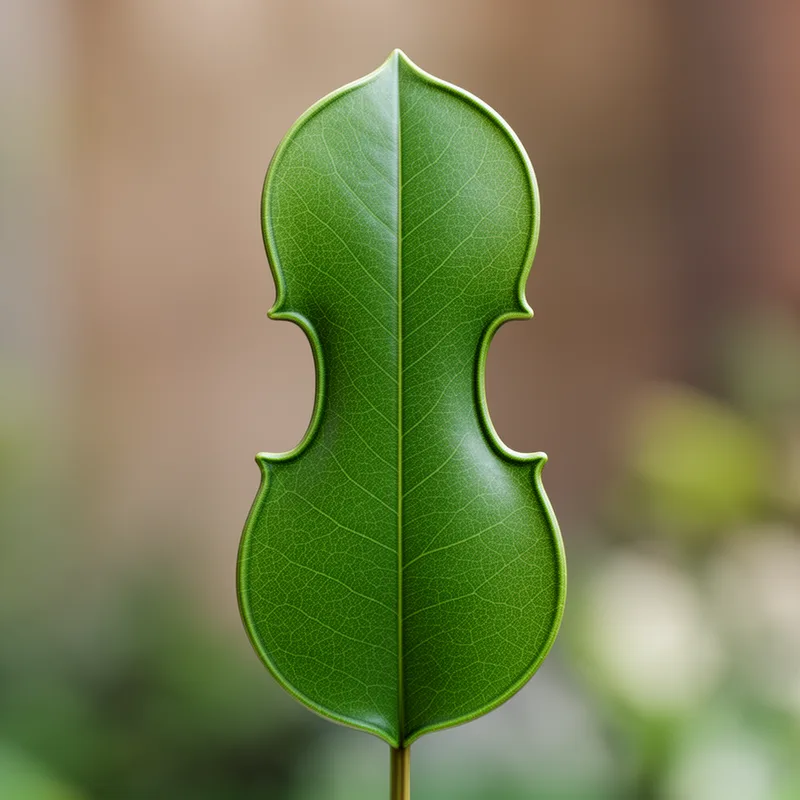
panduriform
- adjective
- /ˈpændjʊrɪfɔrm/
- Specialized
- Botanists use the term panduriform to describe leaves with a fiddle-shaped outline.
Examples
-
She identified the species by its panduriform leaves, which resemble a violin.
-
The leaves of this plant are panduriform, giving them a distinctive appearance.
-
The panduriform leaves of the plant are quite unique.
-
Is this leaf panduriform in shape?
-
The botanist explained that the panduriform shape of the leaves is typical for this species.
-
In art class, we discussed how the panduriform leaves of the tree inspired the painter's work.
-
The garden featured several plants with panduriform leaves, each showcasing their unique curvature.
Synonyms
A leaf with rounded ends and a narrow middle like a fiddle
A leaf shaped like a violin with a narrow middle

A leaf or object with rounded ends and a narrow middle like a violin
Compounds
Surface Forms
Morphology
panduriform = fiddle (semi-transparent) = pandur + form
The suffix '-form' clearly means 'shaped like', but the root 'pandur-' is an obscure combining form (not a familiar English word), so the connection to 'fiddle' is not obvious to most learners.
Etymology
Panduriform comes from an old word pandura meaning 'fiddle' and the ending -form meaning 'shape'. So panduriform simply means 'fiddle-shaped', which is why it describes leaves with rounded ends and a narrow, pinched middle.

