
pandeism
- noun
- /ˈpænˌdeɪɪzəm/
- Formal
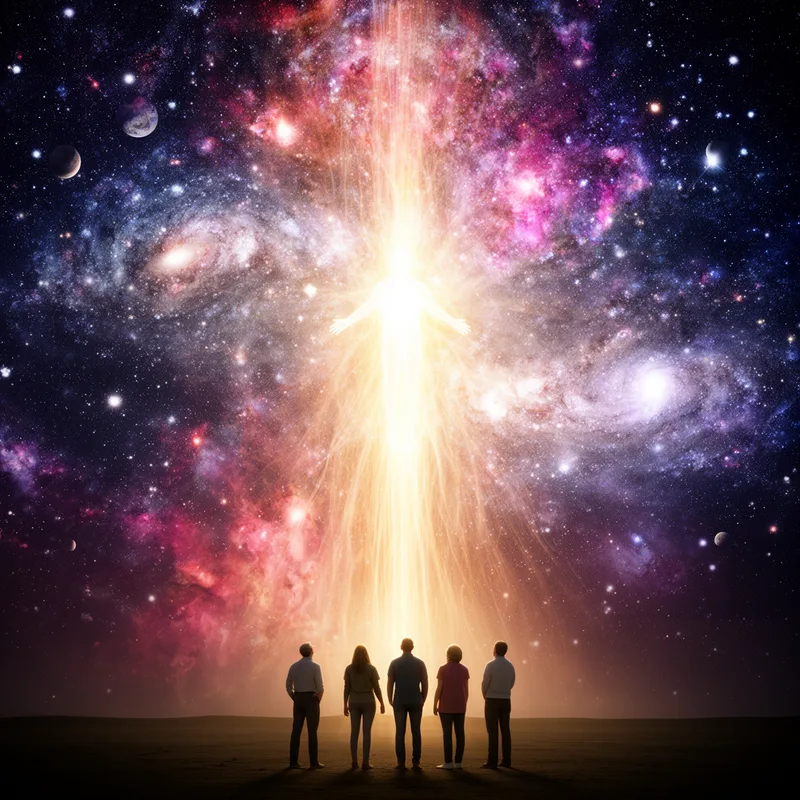
- Followers of pandeism believe that the divine became the universe itself after creation.
Examples
-
Adherents of pandeism assert that the universe is not separate from the divine but is the very embodiment of it.
-
Many scholars have studied pandeism as a unique blend of pantheism and deism.
-
His philosophical writings frequently reference pandeism in the context of comparative religion.
-
Many philosophers discuss pandeism as a form of theology.
-
Some people believe in pandeism rather than traditional theism.
-
The concept of pandeism is often explored in discussions about the nature of existence and divinity.
-
In his lecture, the philosopher explained pandeism as a belief that God exists within every part of the universe.
Surface Forms
Morphology
Etymology
Pandeism comes from pan- meaning 'all' (as in pandemic) and deism, the belief in a 'God' who made the world but does not act in it. So pandeism is the idea that God became the whole universe and that the universe itself is now the only form of God.

