
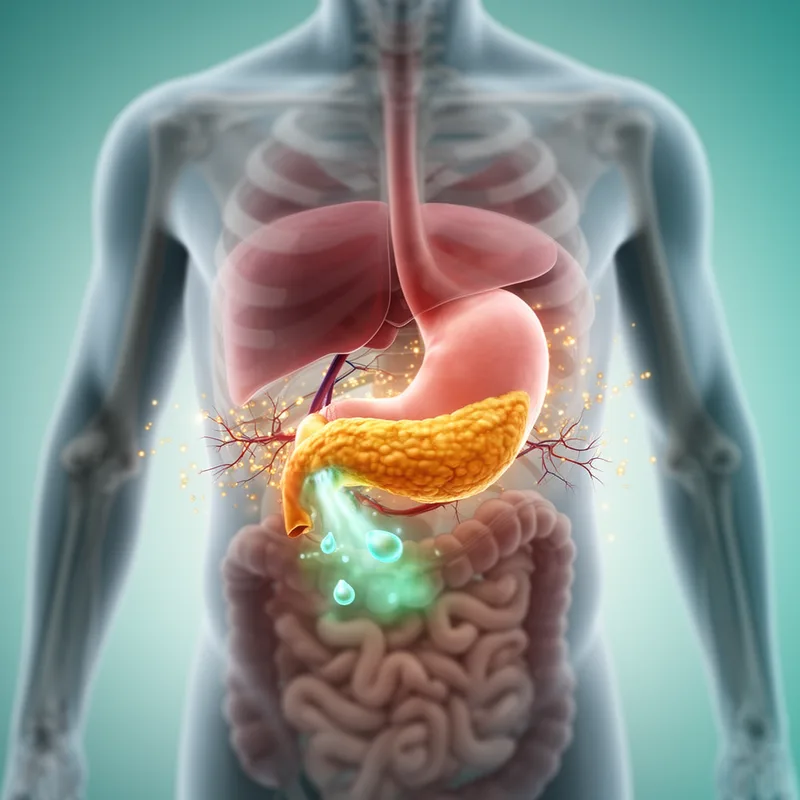
pancreas
 1
4.1
1
4.1

- noun
- /ˈpæŋkriəs/
- Specialized
- And that then results in the pancreas not releasing insulin.
Loading YouTube…
Watch on YouTubeAnd that then results in the pancreas not releasing insulin.
- And that then results in the pancreas not releasing insulin.
- That would be the pancreas, Vanessa says.
- Message goes brain to pancreas, Sugar's coming, Release the insulin.
- I can't make my pancreas secrete things if I want more.
- Like could see pancreas secreting insulin.
- This is a beautiful proxy marker for how much insulin your pancreas is having to produce each day.
- They play a key role in the release of insulin from the pancreas.
- So pancreatitis is basically where your pancreas just goes haywire as a result of taking these drugs.
- This your pancreas, this your lungs.
- You have a weak organ system like your pancreas or spleen or liver or overwhelmed.
- Spleen, liver, pancreas, and large intestines?
- The problem is very, very often your pancreas is not burned out.
- With time, many people's pancreas Peters out.
- Worry cause disease of the upper GI system, your pancreas, your spleen, all those areas.
Examples
-
What it does not do is increase your pancreas's secretion of insulin.
-
And what we know is, as I said, our pancreas has a clock.
-
So it could now remember, you can live without a, a pancreas, you know.
-
And what if they were cells from the pancreas, for example?
-
And that fat that gets stored in the liver and in the pancreas, we would call that ectopic fat.
-
You have a weak organ system like your pancreas or spleen or liver or overwhelmed.
-
So organs, we're talking about liver, heart, kidney, spleen, pancreas, testicle, ovaries, brain.
-
The pancreas plays a crucial role in regulating blood sugar levels by secreting insulin.
-
After the surgery, doctors explained how the pancreas produces important digestive enzymes.
-
Diabetes is a condition that affects how the pancreas produces insulin to control blood sugar.
Compounds
- Specialized
An inherited illness that makes thick mucus and causes breathing and digestion problems
Surface Forms
Etymology
The word pancreas comes from Greek parts pan- meaning 'all' and kreas meaning 'flesh', because the organ is large and fleshy. So think of pan- as in panorama ('all') to remember the pancreas as a big gland behind the stomach that makes insulin and digestive juices.