

to pan out
- phrasal verb
- /pæn aʊt/
- Specialized
- They panned out the dirt to find gold.
Examples
-
After collecting the dirt from the stream, they started to pan out the material to see if any gold was hidden inside.
-
To find gold, miners often use a method called panning, where they pan out the gravel from the riverbed.
-
She spent hours panning out silt from the creek but found only a few flecks of gold.
-
The old prospector hoped that this riverbed would pan out enough gold to make him rich.
-
They learned how to pan out minerals using simple equipment at the mining museum.
-
Can you pan out this gravel for gold?
-
During the gold rush, prospectors would pan out the sediments in hopes of discovering precious nuggets.
Synonyms
 3
7.7
3
7.7

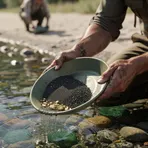
To wash sand or gravel in a shallow dish to find gold
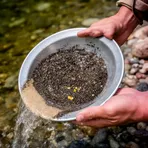
To wash sand or gravel in a shallow dish to find small pieces of gold
Surface Forms
Morphology
pan + out
The verb 'pan' does not transparently convey the idea of 'turning out' or 'having a good result' for a B1 learner, and 'out' only signals direction/result without supplying the core sense. The idiomatic sense (likely historically linked to panning for gold) is not predictable from the literal meanings of the constituents, so learners who only know the parts would not reliably infer the MWE meaning.
Etymology
Pan out originally meant washing earth and gravel in a pan to find gold. Miners would wash the dirt so the heavy gold stayed in the pan while the lighter material washed out, so the phrase means 'to wash earth or gravel to find gold'.