
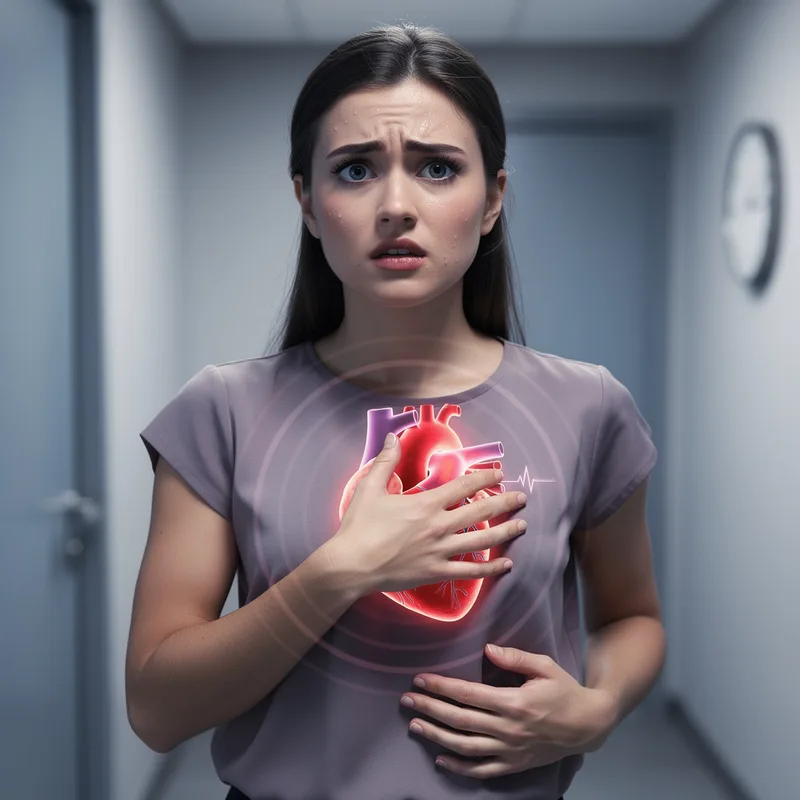
to palpitate
 1
8.0
1
8.0

- verb
- /ˈpæl.pɪ.teɪt/
- When she heard the good news, her heart began to palpitate with excitement.
- heart palpitated
- made my heart palpitate
Examples
-
Your heart is really palpitating.
-
He could feel his heart palpitating in his temple.
Fiction book (1995) -
Don't you realize my heart starts to palpitate...
-
His heart palpitated in his chest.
Fiction book (1991) -
I cannot believe how my heart has begun palpitating over this.
Fiction book (1990) -
I pick it up, my heart palpitating with anxiety.
Fiction book (1996) -
Your heart is palpitating.
-
My heart palpitated in the sickness of fear, and I hurried on with irregular steps, not daring to look about me.
Fiction book (2002) -
As the thrilling movie reached its climax, he could feel his heart palpitating in anticipation.
-
After running up the stairs, her heart was palpitating from the effort.
Synonyms
 10
3.5
10
3.5
To make strong regular beats you can feel in your chest
 8
4.4
8
4.4
To have the heart beat quickly and unevenly, often from excitement or nervousness
 1
5.2
1
5.2
To feel your heart beat faster from excitement, fear, or nervous waiting
Antonyms


How Fast

Surface Forms
Morphology
palpitate = palpit + ate
Formed from the bound root 'palpit' + the verb-forming suffix '-ate'; the root is not a standalone English word and the formation is not transparently analyzable by typical learners.
Etymology
Palpitate comes from the Latin palpitare, which meant 'to flutter', and from the root palp- meaning 'to touch'. So when your heart palpitates you can feel it beating fast and strongly in your chest.