

palmatifid
- adjective
- /pælˈmætɪfɪd/
- Specialized
- In botany, a leaf is described as palmatifid when its lobes are split in a way that resembles an open hand.
Examples
-
Some geraniums feature palmatifid leaves that are deeply but not completely divided.
-
The maple has varieties with palmatifid leaves, making them appear like open hands.
-
In botany, a palmatifid leaf is distinct from a palmate-lobed one.
-
The palmatifid leaves of the plant are quite unique.
-
Can you identify a palmatifid leaf among these samples?
-
Some species of geraniums exhibit palmatifid leaves that have clefts reaching towards the base, but not fully divided.
-
You can recognize a palmatifid leaf by its shape, which resembles the fingers of a hand extending outward.
Synonyms

Leaf parts spread from one center point like the fingers of a hand
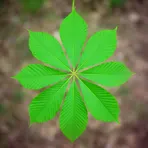
A leaf with lobes that spread from one point like a hand

A leaf with parts that spread from one point like a hand
How Divided


Surface Forms
Morphology
Etymology
Palmatifid comes from Latin parts: palm- meaning 'palm' or 'hand' and -fid meaning 'split' or 'cleft'. So a palmatifid leaf is like an open hand whose 'fingers' are split almost to the base but not all the way, which is why the word describes this kind of leaf.