

paleostriatum
- noun
- /ˌpeɪliˈstraɪətəm/
- Specialized
- Damage to the paleostriatum can affect motor coordination and balance.
Examples
-
During the dissection, the pathologist identified the paleostriatum within the basal ganglia.
-
The paleostriatum plays an important role in regulating voluntary movement.
-
The paleostriatum plays a crucial role in movement.
-
Researchers study the paleostriatum to understand motor functions.
-
Damage to the paleostriatum can affect motor coordination and balance.
-
The paleostriatum plays an important role in regulating voluntary movement.
-
During the dissection, the pathologist identified the paleostriatum within the basal ganglia.
Synonyms
 1
9.9
1
9.9

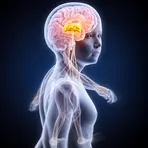
A deep part of the brain that helps control movement

 1
9.9
1
9.9
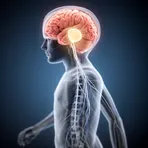
A pale part inside the brain that helps control movement
Surface Forms
Morphology
Etymology
Paleostriatum comes from paleo- meaning 'old' and striatum meaning 'striped', like the English word 'stripe'. So it literally means 'old striped area', which fits because it is an older part of the striatum in the brain that helps control movement and coordination.