
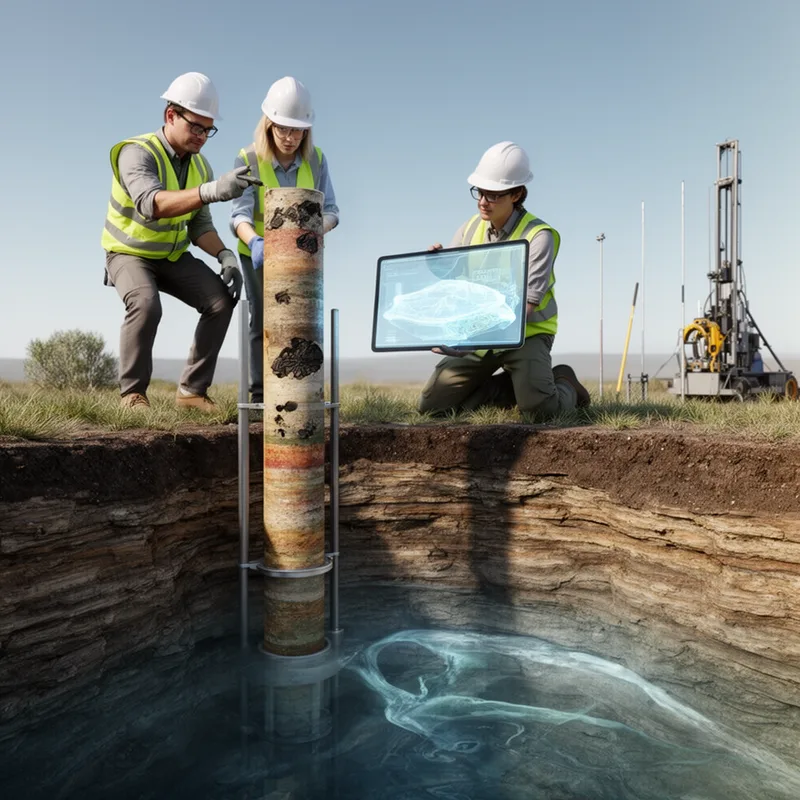
paleogeology


 1
9.9
- noun
- /ˌpeɪliəʊˈdʒiːələdʒi/
- Specialized
- Researchers in paleogeology reconstruct the environments of Earth’s distant past.
Examples
-
The conference featured a session on advances in paleogeology and subsurface exploration.
-
The study of paleogeology provides insights into Earth's history.
-
A background in paleogeology is essential for understanding mineral deposits formed millions of years ago.
-
Many universities offer courses in paleogeology.
-
The scientist specialized in paleogeology to understand the ancient environments that shaped our planet.
-
Studying paleogeology helps researchers uncover the geological history hidden beneath our feet.
-
Many geological layers reveal important information, making paleogeology essential for reconstructing Earth's past.
Surface Forms
Morphology
Etymology
The word paleogeology combines paleo- ('ancient') and geology ('study of the Earth'), and is like paleontology but for old rocks and landscapes rather than animals. So, paleogeology means studying ancient Earth surfaces and features, especially those now buried beneath other rocks.