
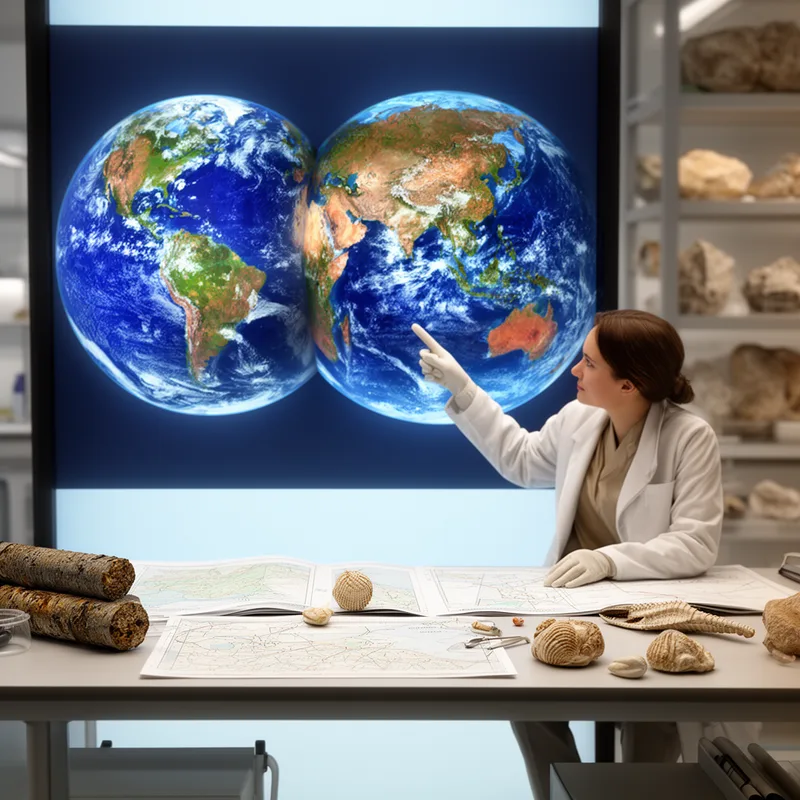
paleogeography


 1
9.9
- noun
- /ˌpeɪliəʊˈdʒiːəɡrəfi/
- Specialized
- The course in paleogeography included studying fossil evidence to reconstruct ancient landforms.
Examples
-
The paleogeography of the region has changed dramatically over millions of years.
-
The study of paleogeography reveals how continents have shifted over millions of years.
-
Research in paleogeography has helped scientists understand the movement of tectonic plates.
-
She specialized in paleogeography, mapping the continents as they appeared millions of years ago.
-
Researchers study paleogeographies to understand Earth's ancient climates.
-
Researchers use paleogeography to understand climate changes during ancient geological epochs.
-
The paleogeography of an area can provide insights into its prehistoric environment and ecosystems.
Surface Forms
Morphology
Etymology
Paleogeography combines paleo- meaning 'ancient' and geography meaning 'study or map of the Earth'. So, paleogeography is like making maps or studies of how the Earth's land looked long ago.