
paleoethnography
- noun
- /ˌpeɪliəʊˈɛθnəɡrəfi/
- Specialized
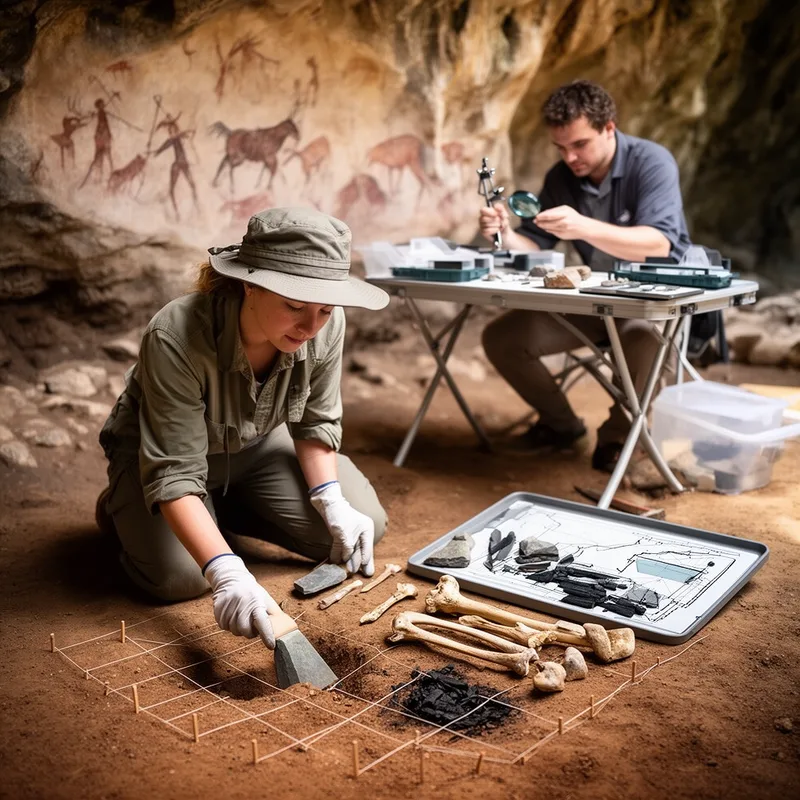
- Studying cave art is one method employed in paleoethnography to reconstruct ancient lifeways.
Examples
-
Her research in paleoethnography revealed fascinating details about early human social structures.
-
By examining burial sites, paleoethnography provides valuable insights into the rituals of ancient cultures.
-
Advances in archaeology have greatly expanded our understanding of paleoethnography.
-
The paleoethnography of early humans reveals fascinating insights.
-
Paleoethnography helps us understand ancient human behaviors.
-
The research in paleoethnography has uncovered new information about the hunting practices of prehistoric people.
-
Archaeologists often use tools from paleoethnography to interpret the daily lives of our Paleolithic ancestors.
Surface Forms
Morphology
paleoethnography = ethnography (semi-transparent) = paleo + ethnography
Formally the composition 'paleo' + 'ethnography' directly yields 'ethnography of ancient peoples', but the term is technical and 'paleo-' is a specialized combining form that may be unfamiliar to many learners.
Etymology
The word paleoethnography breaks into paleo- ('old'), ethno- ('people') and -graphy ('writing' or 'recording'), as in paleolithic, ethnic, and photography. So it literally means 'writing about old people' and refers to the study that uses things left behind to recreate how early humans lived.

