
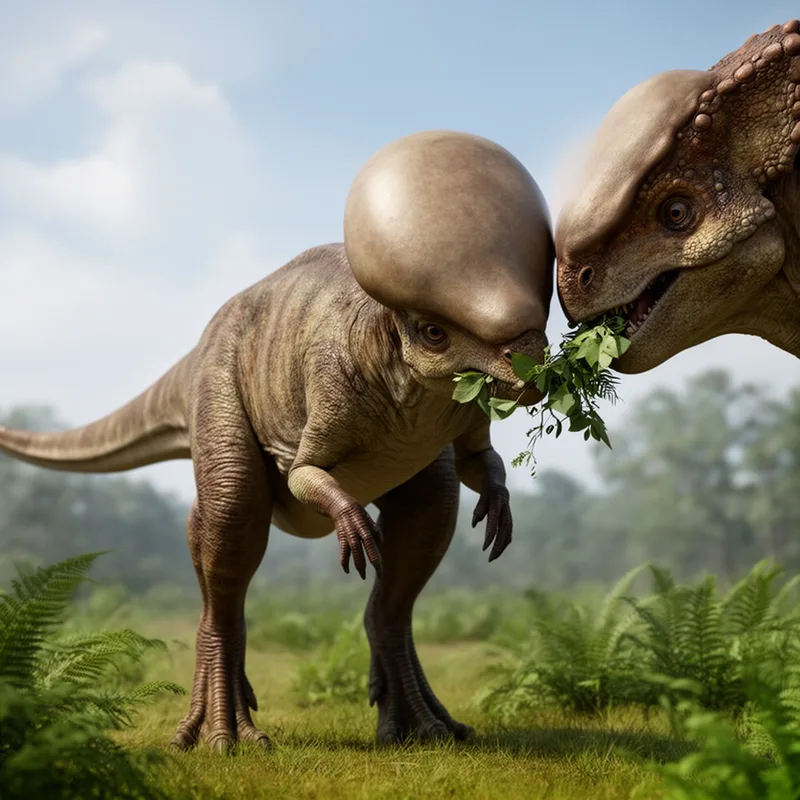
pachycephalosaur


 1
9.9
1
9.9
- noun
- /ˌpækɪˈsɛfələˌsɔr/
- Specialized
 :
pachicefalosaurio
:
pachicefalosaurio
- The pachycephalosaur is famous for its extraordinarily thick skull, which scientists think was used for head-butting behaviors.
Examples
-
Children visiting the museum were fascinated by the life-size model of a pachycephalosaur.
-
The paleontologist described the newly discovered pachycephalosaur as having a thick domed skull unlike any other dinosaur.
-
Fossils of a pachycephalosaur were discovered in North America, providing insight into Cretaceous period fauna.
-
The pachycephalosaur roamed the plains during the Late Cretaceous period.
-
Did you know that the pachycephalosaurus had a thick skull?
-
The pachycephalosaur was a massive bipedal herbivore, known for its unique feature of a dome-shaped head.
-
Fossils of the pachycephalosaur reveal its herbivorous diet and the impressive ten inches of bone atop its skull.
Synonyms
A two-legged plant-eating dinosaur with a thick rounded skull
A large plant-eating dinosaur with a thick domed skull that walked on two legs
Surface Forms
Morphology
pachycephalosaur = pachy + cephalo + saur
The word is formed from technical Greek combining forms ('pachy-' 'cephalo-' '-saur') that are not standalone English morphemes; an average B1 learner would not be able to infer the meaning from familiar English vocabulary.
Etymology
The word pachycephalosaur comes from Greek parts: pachy- meaning 'thick', cephalo- meaning 'head', and -saur meaning 'lizard'. So, a pachycephalosaur is a 'thick-headed lizard', which fits this dinosaur's very thick skull that people think was used for head-butting.