

paca


 1
9.9
1
9.9
- noun
- /ˈpɑːkə/
- US
- Deer were plentiful, as were skunks, opossums, armadillos, coatis, monkeys, pacas, and agoutis.
- wild pacas
Examples
-
During our wildlife tour, we spotted a paca foraging for food near the riverbank.
-
We ate agouti, paca, large rodents, turtle eggs, crocodile, and all kinds of fish.
Academic text (2003) -
In the Amazon rainforest, the paca is prized for its tender meat and spotted coat.
-
The local market offered various dishes made from paca, showcasing its popularity in regional cuisine.
Synonyms
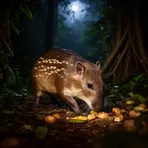
A large rodent like a paca that is active at night in Central and South America

A large animal like a rat from western South America living in holes with spotted fur eaten for meat

A large spotted rodent that lives in mountain forests of Central and South America
Compounds
A large animal like a rat from western South America living in holes with spotted fur eaten for meat
Surface Forms
Etymology
Paca comes from an indigenous South American name, probably Tupi or Guarani, that local people used for the spotted, burrowing rodent; think of guides pointing and saying the local word for the animal. European settlers kept that name, so today paca still means the large, pig-like rodent often eaten for its meat.