
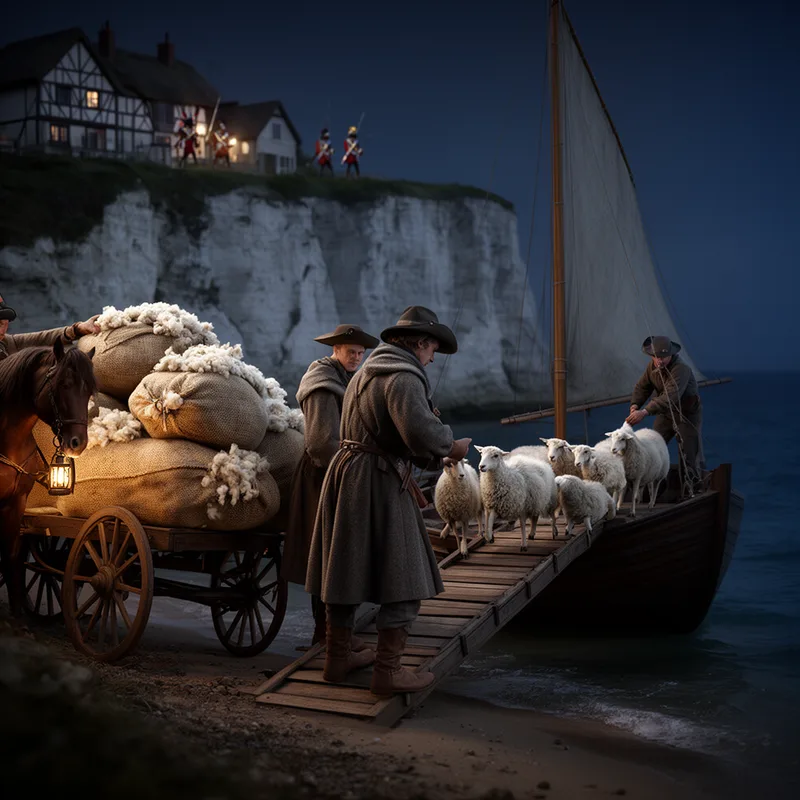
owling
- noun
- Archaic
- Laws were enacted to prevent owling and protect the English wool trade from illegal export.
Examples
-
In the seventeenth century, owling was considered a serious offense by the English authorities.
-
Historical records show that many were prosecuted for owling during the medieval period.
-
In the 18th century, owling was a serious crime in England.
-
Many farmers were punished for owling their sheep.
-
In the seventeenth century, owling was seen as a way to undermine the wool industry in England.
-
A significant number of smugglers were arrested for owling to evade taxes on wool exports.
-
The authorities took strict measures against owling to safeguard the nation's valuable wool supply.
Synonyms

 76
4.5

To bring banned goods into or out of a country without paying taxes
 2
3.8
Taking goods or people across a border in secret and against the law
Surface Forms
Morphology
Etymology
Owling once named the illegal moving of wool out of England, a kind of 'smuggling', because smugglers worked at night like owls. That night-time image explains why old records use owling for secret wool export, a meaning you now find mostly in history.