
overloud
3.4
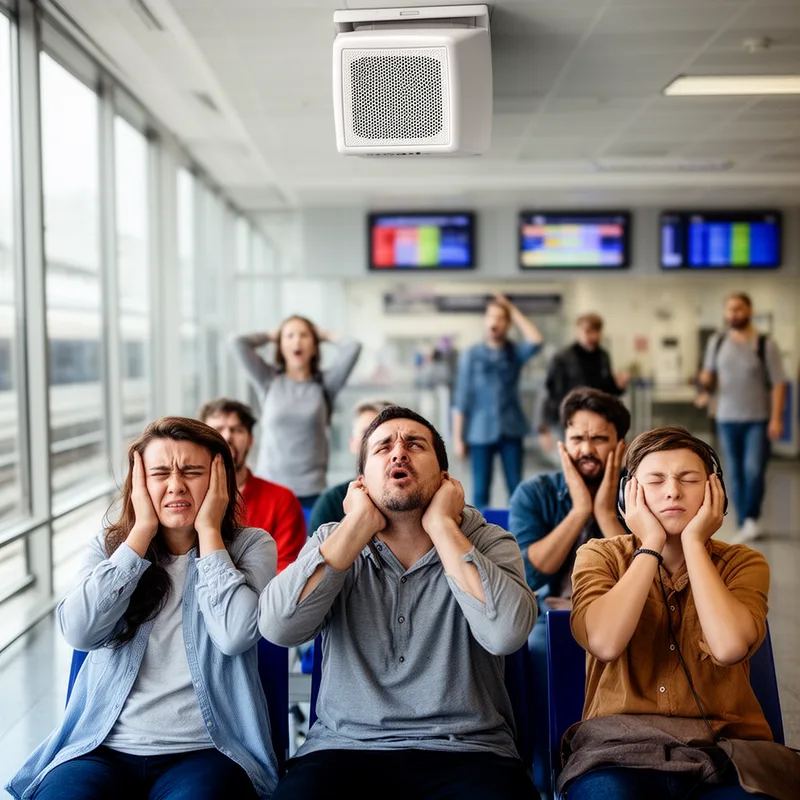
Too noisy in a way that annoys or disturbs people
- adjective
- /ˌoʊvərˈlaʊd/
:
demasiado ruidoso
- During the presentation, his overloud voice distracted everyone in the room.
Examples
-
She couldn't concentrate on her work because of her roommate's overloud laughter.
-
In an overloud, whining voice, the man remarked, "I told you no good would come of letting those people put on uniforms."
Fiction book (1992) -
The overloud music made it impossible to have a conversation at the party.
Synonyms

noisy
vsoverloud
 125
1.0
125
1.0

Full of loud, unpleasant sounds
is excessively loud and disruptive not just generally loud

raucous
vsoverloud
31
7.1
Making a loud, rough, and unpleasant sound that hurts your ears
is excessively loud and disruptive rather than only harsh in tone

earsplitting
vsoverloud
6.3
Very loud in a way that hurts your ears
is excessively loud in a disruptive way rather than causing pain
Antonyms


How Loud

Surface Forms
Morphology
Etymology
Overloud comes from the parts over- meaning 'too much' and loud meaning 'strong sound', so it describes sound that is too strong or unpleasant. That's why we call speakers, TVs, or announcements overloud when they are annoyingly noisy.