

overland
 3
4.0
3
4.0

- adverb
- /ˈoʊvərˌlænd/
- Ahead, other men kept the horse herd moving overland.
Loading YouTube…
Watch on YouTubeThey can move overland into Colombia and they can cross the Darien Gap into Panama.
- They can move overland into Colombia and they can cross the Darien Gap into Panama.
Examples
-
They could have smuggled him overland across Europe.
-
Mr. Hopkins is set on going overland.
-
The rest of your force can go overland by horse.
Fiction book (1990) -
I wanted to go all the way overland.
-
I chose to come overland for reasons of my own.
-
Let's remember that these creatures can travel overland, too.
-
Then the Norsemen returned overland through Europe to Norway.
Academic text (1996) -
It'll be quicker than going overland.
-
Holdt left Denmark in 1970 and worked on a farm in Canada for a year before he decided to travel overland through the United States to Latin America.
Academic text (2000) -
We will travel overland by bus to explore the beautiful countryside.
Antonyms

Compounds

A series of major battles in 1864 during the American Civil War between Grant and Lee that caused many deaths
Surface Forms
Morphology
Etymology
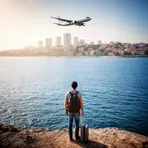
Overland comes from the parts over ('across' or 'above') and land ('ground' or 'country'). It literally means to travel 'across the land'—think of it as the opposite of overseas—so it means going by land rather than by sea or air.