

overexcitability
- noun
- /ˌoʊvərɪkˈsaɪtəˌbɪlɪti/
- Specialized
- The doctor's diagnosis revealed that her overexcitability was causing frequent muscle spasms during stressful situations.
- psychomotor overexcitability
Examples
-
After the workout, his overexcitability resulted in uncontrollable muscle twitches that took several minutes to subside.
-
Teachers often notice overexcitability in students with high energy levels that can lead to trembling hands or fidgeting.
-
Clearly, the psychomotor overexcitability of the gifted child could be labeled as "hyperactive" by the observer uninformed of some gifted children's tendencies.
Academic text (2003) -
It is certainly reminiscent of the psychomotor overexcitability described by Dabrowski and Piechowski (1977) as high energy and restlessness.
Academic text (1992) -
One explanation of this divergence from Dabrowski's notion of psychomotor overexcitability is that the subjects misconstrued the concept of psychomotor intensity to mean sports and athletic achievement rather than a need for action.
Academic text (1992)
Synonyms
 1
7.5
1
7.5

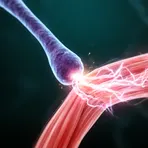
Unusually sensitive to small physical signals in a nerve or muscle


 1
5.3
1
5.3
A body part or process working more than normal

A state when nerves, muscles, or behaviour react too much

A time when someone feels very happy or nervous and cannot calm down
Antonyms

How Reactive
- Specialized
 1
6.8
1
6.8
Surface Forms
Morphology
overexcitability = excitability (transparent) = over + excite + able + ity
Formed by 'over-' + 'excitability' to indicate excessive physiological responsiveness; the morphological pieces map directly.
Etymology
Overexcitability breaks into over- meaning 'too much', excite meaning 'to stir up', and -ability meaning 'the quality of being'. So picture a nerve or muscle that reacts too easily, like a wire that sparks at the smallest touch, which is why doctors use the word for unusually strong nerve or muscle responses such as spasms or seizures.