

to overbound
- verb
- /ˌoʊvərˈbaʊnd/
- Specialized
- After years of use, the rare manuscript was carefully overbound to preserve it.
Examples
-
She decided to overbound her grandfather's diary to keep it safe for future generations.
-
The library staff overbound several old textbooks to extend their lifespan.
-
Don't overbound!
-
The librarian decided to overbound the old textbooks.
-
The library staff overbound several old textbooks to extend their lifespan.
-
After years of use, the rare manuscript was carefully overbound to preserve it.
-
She decided to overbound her grandfather's diary to keep it safe for future generations.
Synonyms

 23
5.1
23
5.1

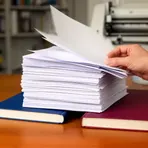
To give a book or notebook a protective cover

To cover something with an extra layer to protect it or make it look nicer
Antonyms


How Protective

Surface Forms
Morphology
overbound = bound (semi-transparent) = over + bound
Form is clearly over- + bound, but this specific sense is a specialized bookbinding term where 'over-' implies placing an additional cover rather than simply 'too much'.
Etymology
Overbound joins over- ('on top of') and bound ('to bind', as in a book), so it means to put a new cover or binding over a book. Think of placing a protective cover over an old book to keep it safe.