
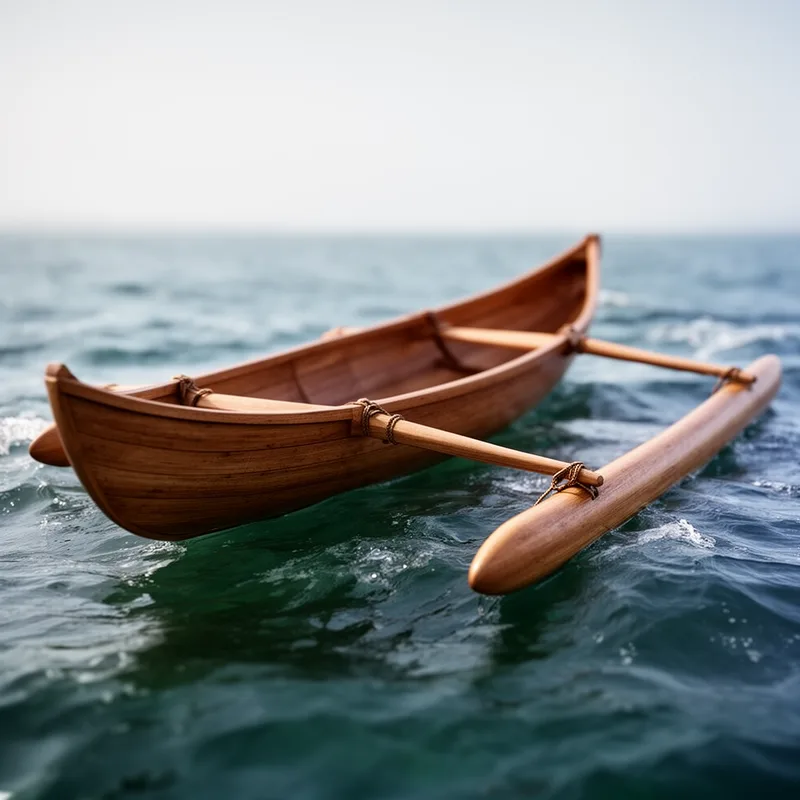
outrigger
 3
7.7
3
7.7

- noun
- /ˈaʊtˌrɪɡər/
- Specialized
- The sailors used the outrigger to keep the canoe stable while navigating the rough waters.
- outrigger canoe
Examples
-
Its most distinctive feature was the way in which some of the beams protruded through the sides of the hull to form an outrigger, which would have supported a bank of rowing oars.
Academic text (2002) -
I'm going out to the beach and see if I can scrounge myself an outrigger canoe.
-
A single long outrigger extended to the craft's starboard side.
Fiction book (1992) -
Fish came fresh caught from the sea by skilled Tahitians in large outrigger cedar pirogues.
Fiction book (1991) -
To resist wind load, steel outrigger trusses connect the mega columns to the core wall between the 39th and 44th floors and between the 72nd and 76th floors.
Academic text (2016) -
Many canoes are designed with an outrigger to enhance their balance and prevent capsizing.
-
During the race, the team relied heavily on their outrigger for stability as they paddled through the waves.
Synonyms
 15
6.3
15
6.3
A hollow float that supports things on water, like a seaplane or a bridge
Compounds

- Specialized
1
6.7
A narrow canoe with one or more side floats for balance in rough water
How Long

Surface Forms
Morphology
Etymology
The word outrigger comes from out- 'outside' and rig 'frame' or 'equipment', so it names a frame that sticks out from the side of a boat to hold a float. Polynesian sailors used these frames to make their canoes more 'steady', which is exactly what an outrigger does today.