
otoacoustic


 1
9.9
- adjective
- /ˌoʊtəʊəˈkuːstɪk/
- Specialized
- A second important clinical point is that while this child demonstrated normal hearing to 20 kHz, she showed abnormal otoacoustic emissions before beginning treatment.
- otoacoustic emissions
- otoacoustic emissions testing
- Transient-evoked otoacoustic
Examples
-
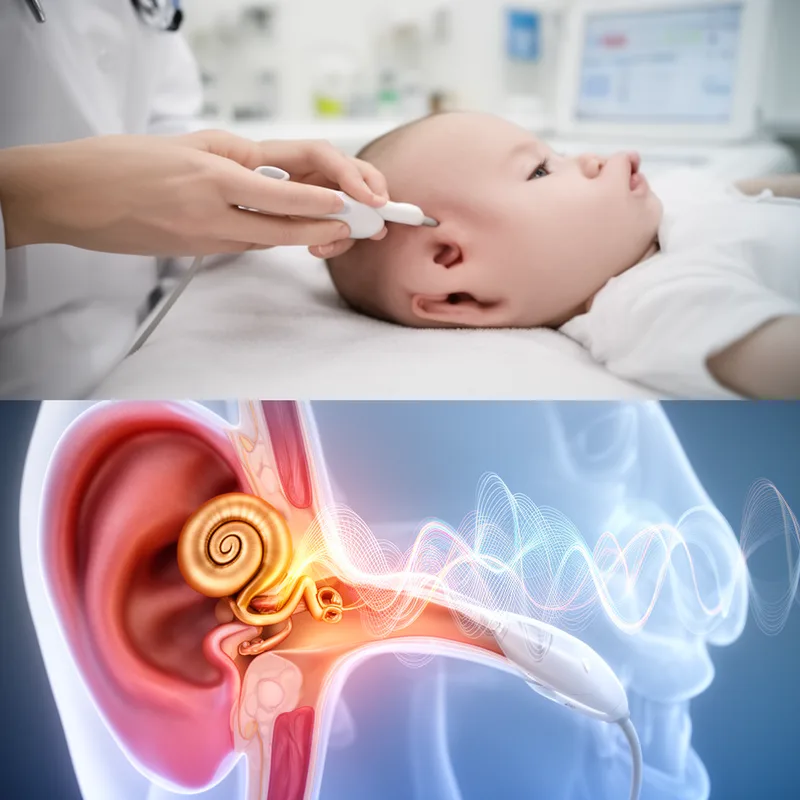
The doctor explained that otoacoustic emissions testing is a valuable method for assessing hearing in newborns.
-
A nonbehavioral audiologic assessment revealed hearing acuity within normal limits (1000 Hz and 5000 Hz) and normal otoacoustic emissions bilaterally.
Academic text (2013) -
Transient-evoked otoacoustic emissions were less than they had been at the previous visit.
Academic text (2008) -
Otoacoustic emissions testing at 3 months reveals improved responses in the left ear.
Academic text (2009) -
The use of otoacoustic emissions testing in the diagnosis and monitoring of the response to treatment is helpful in the management of the tinnitus patient.
Academic text (2008) -
Otoacoustic emissions testing revealed improved responses in the left ear (Figure 3).
Academic text (2009) -
Otoacoustic emissions testing revealed similar transient-evoked findings and an increase in the range of the distortion product findings in the right ear.
Academic text (2008) -
Otoacoustic emissions testing revealed improvement in both transient-evoked and distortion-product findings in both ears (Figure 3).
Academic text (2008) -
The results of repeat hearing tests remained the same, with the exception of improved findings with respect to the transient evoked otoacoustic emissions (figure).
Academic text (2009) -
During the hearing exam, the technician used otoacoustic emissions to check how well the patient's ears respond to sounds.
Surface Forms
Morphology
Etymology
Otoacoustic joins oto- ('ear') and acoustic ('hearing' or 'sound'), the same acoustic you see in acoustic guitar. So otoacoustic means sounds made by the ear itself, which is why doctors use otoacoustic tests to check hearing.