
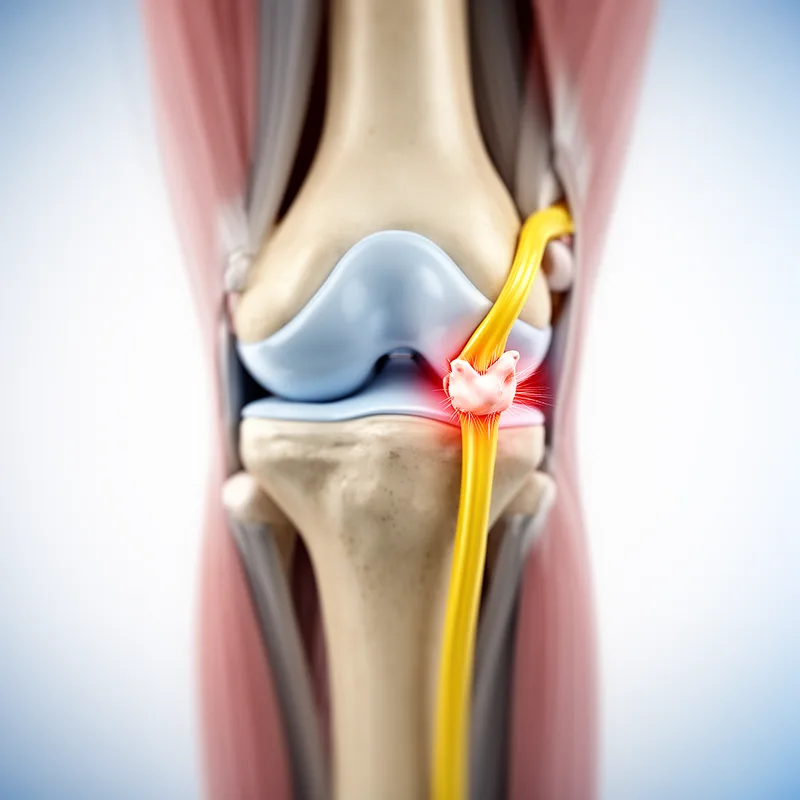
osteophyte


 1
9.9
- noun
- /ˈɑːstɪəˌfaɪt/
- Specialized
- In its earlier stages, osteophyte formation or bony spurs are often seen.
- osteophytes around the joint
Examples
-
X-ray both hips: osteoarthritic changes, osteophytes with reduced joint space.
Academic text (2007) -
Osteophytes are removed from the joint, and the positions of the Artelon wings are marked on the dorsal cortex of the trapezial and metacarpal bones.
Academic text (2011) -
You can see he has these large ventral flowing osteophytes consistent with dish.
-
PHOTO (BLACK & WHITE): FIGURE 3. Hyperostosis and osteophytes around the shoulder joint.
Academic text (2004) -
Eaton stage III exhibits more severe joint narrowing, with osteophytes and debris greater than 2 mm in size.
Academic text (2011) -
A Rongeur bone cutter was used to remove thickened soft tissues and osteophytes around the joint.
Academic text (2015) -
X-ray lumbosacral spine: degenerative changes with osteophytes.
Academic text (2007) -
Eaton stage II has narrowing of the joint space, with debris and osteophytes smaller than 2 mm in size, and more than one-third subluxation of the metacarpal.
Academic text (2011)
Synonyms
A hard, harmless growth on a bone that sticks out
How Large

Surface Forms
Morphology
osteophyte = osteo + phyte
The parts are Greek combining forms ('osteo-' = bone, '-phyte' = growth) that are technical and not likely to be recognizable to an average B1 learner, so the meaning cannot be reliably derived from familiar English base words.
Etymology
The word osteophyte comes from two Greek parts, osteo- meaning 'bone' and -phyte meaning 'plant' or 'growth'. So an osteophyte is like a 'bone plant', a small extra bony growth on the edge of a bone that can press on tissues and cause pain.