
osteometric
- adjective
- /ˌɑːstɪˈoʊmɛtrɪk/
- Specialized
- The researcher conducted an osteometric analysis to determine the height of the ancient skeleton.
Examples
-
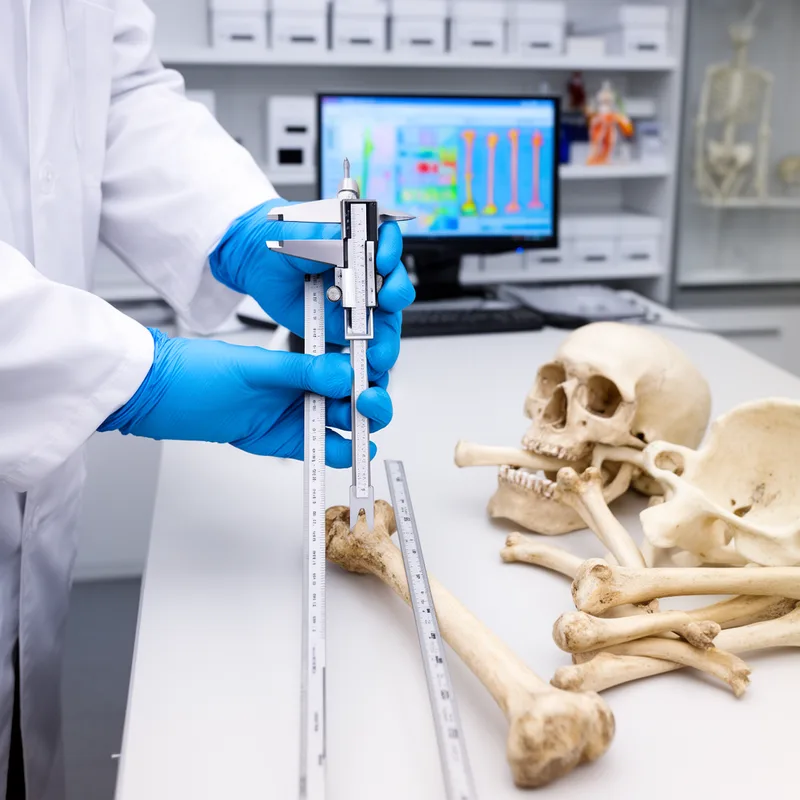
Osteometric analysis relies on the measurement of remains with standardized tools that include tape measures, calipers, and different types of calibrated boards.
Academic text (1996) -
The apparatus used for this study was an osteometric board and measuring tape.
Academic text (2007) -
However, unlike macroscopic observations, osteometric studies require specialized tools that are often expensive, although the equipment is usually small and easily carried to the field.
Academic text (1996) -
Osteometric analysis is useful in answering questions such as ancestral/descendant relationships, health and nutrition, sexual dimorphism, estimated stature, and sex assessment.
Academic text (1996) -
Gathering osteometric data, which sometimes requires the reconstruction of broken or fragmentary elements, and compiling data on the incidence of non-metric traits are quite exacting and time-consuming.
Academic text (1996) -
Using precise instruments, the team gathered osteometric data to assess the health of the remains.
-
In forensic science, osteometric methods are vital for estimating the age and sex of skeletal remains.
Surface Forms
Morphology
Etymology
Osteometric comes from the parts osteo- meaning 'bone' and -metric meaning 'measure', the same idea you see in meter (a device for measuring). So osteometric simply means 'measuring bones', which is why we use it for scientific or medical work on bone size and shape.

