
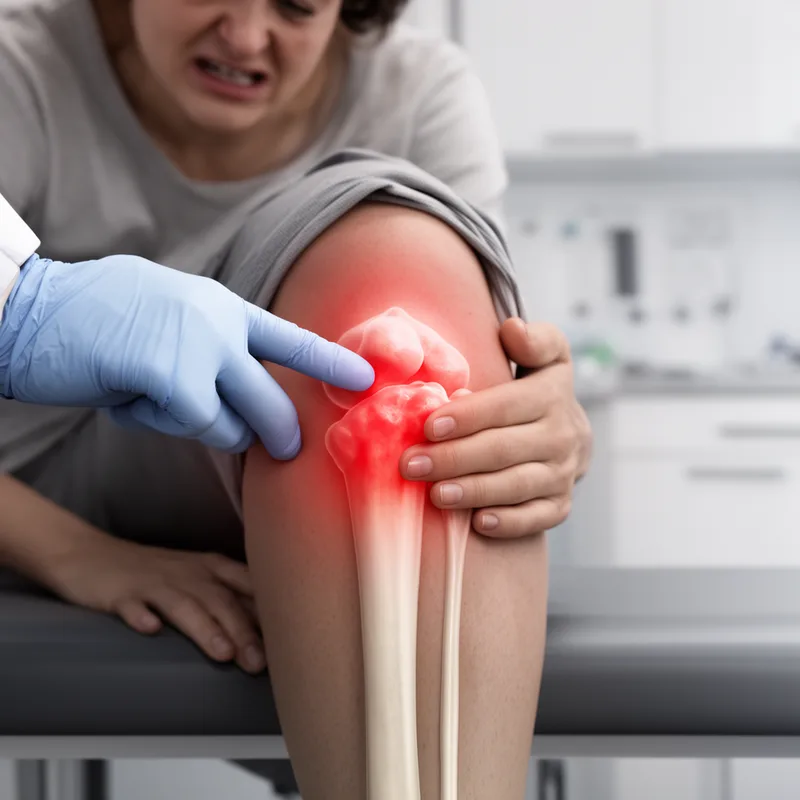
osteitis
- noun
- /ˌɑːstɪˈaɪtɪs/
- Specialized
- Invasive nonfulminant fungal otitis with secondary osteitis, proven by radionucleotide studies in an immunocompetent host, is rarely seen.
Examples
-
A slight degree of osteitis was seen in the long process of the incus.
Academic text (2001) -
This leads to osteitis and mucosal edema with ulceration.
Academic text (2002) -
Paget disease of bone (osteitis deformans) is the second most common bone disease (osteoporosis is the most common).
Academic text (2010) -
The bony involvement of EMCLU includes osteitis, osteoma, periostitis, chronic osteomyelitis, and pathological fractures.
Academic text (2007) -
Osteitis is present in virtually 100% of CSOM patients, a finding that distinguishes CSOM from more transient pathologic alterations of the middle ear cleft.
Academic text (2002) -
Bone demineralization is uncommon in mild hyperparathyroidism, but cystic fibrous osteitis is detected in some cases along with pathologic fractures and brown tumors.
Academic text (2005) -
The doctor explained that osteitis is a serious condition that can lead to intense pain in the affected bone.
-
After the athlete injured his leg, an MRI revealed osteitis in the tibia, requiring further treatment.
-
Chronic osteitis can develop if a bone infection is left untreated, impacting the individual's mobility.
Synonyms
 1
9.9
1
9.9

An infection of a bone and its inside that makes it painful and swollen
Compounds
- Specialized
A long-lasting bone disease in older people that makes bones break down and grow back wrongly, causing pain
Surface Forms
Morphology
osteitis = oste- (semi-transparent) = oste + itis
Formed from the combining form 'oste-' (bone) + the medical suffix '-itis' (inflammation); understanding requires familiarity with medical combining forms, so it is not fully transparent to general learners.
Etymology
Osteitis comes from Greek parts osteo- meaning 'bone' and -itis meaning 'inflammation'. So it's like a 'sore' or swelling in a bone, which is why the word refers to painful bone infections.