
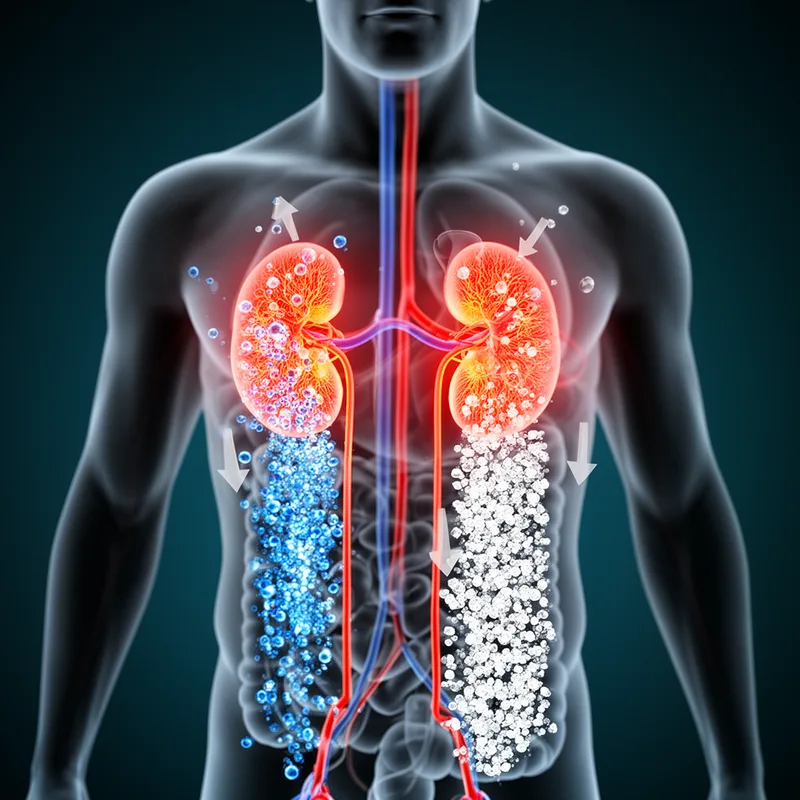
osmoregulation
- noun
- /ˌɑzmoʊˌrɛɡjʊˈleɪʃən/
- Specialized
- The process of osmoregulation helps organisms maintain their internal balance of fluids and electrolytes.
Examples
-
The physiology of land animals underwent significant evolution in terms of circulation, reproduction, osmoregulation, sensation, digestion, and excretion.
Academic text (2003) -
Although these stages of development were not documented with varying temperatures, Bumpus' data describe a "primary egg-membrane" which proved useful in later studies on osmoregulation by embryos (Charmantier and Aiken, 1987).
Academic text (1999) -
Then, we put the functional morphology and evolution of two organ systems, locomotion and osmoregulation, in a broader perspective.
Academic text (2001) -
Many animals have evolved complex mechanisms for osmoregulation to survive in varying environments.
-
In aquatic species, efficient osmoregulation is essential for their survival in saltwater or freshwater habitats.
How Regulated
- Specialized

- Specialized


 1
9.1
Surface Forms
Morphology
osmoregulation = regulation (semi-transparent) = osmo + regulate + ion
While the components 'osmo' and 'regulation' are clear, the specific biological process might not be immediately obvious to all learners.
Etymology
Osmoregulation combines osm(o), the root in osmosis that means 'movement' of water, and regulation, which means 'control'. So osmoregulation is the way living things control the movement of water and salts in their bodies.