
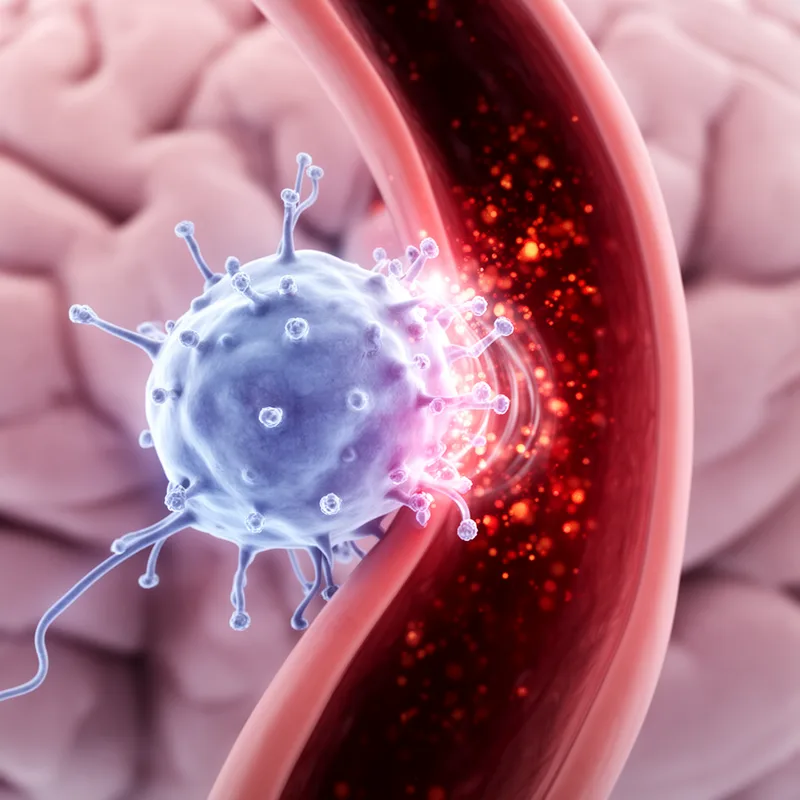
osmoreceptor
9.9
A cell that senses when body fluids like blood become too concentrated
- noun
- /ˌɑzmoʊrɪˈsɛptər/
- Specialized
:
osmoreceptor
- An increase in serum osmolality stimulates osmoreceptors located in the supraoptic nucleus of the hypothalamus to release ADH.
Examples
-
When the body's hydration levels drop, osmoreceptors trigger the sensation of thirst to encourage fluid intake.
-
Osmoreceptors play a crucial role in regulating the body's fluid balance and are sensitive to changes in osmotic pressure.
-
The osmoreceptors in the kidneys help maintain blood pressure by monitoring the concentration of solutes in the blood.
Surface Forms
osmoreceptor singular
osmoreceptors plural
Morphology
Etymology
Osmoreceptor comes from two parts: osmo- meaning 'push' because water moves by pressure, and receptor meaning 'receiver' or sensor, like 'receive'. So an osmoreceptor is a cell that 'receives' or senses the push of water or a change in fluid concentration, which helps the body notice when it does not have enough water.

