
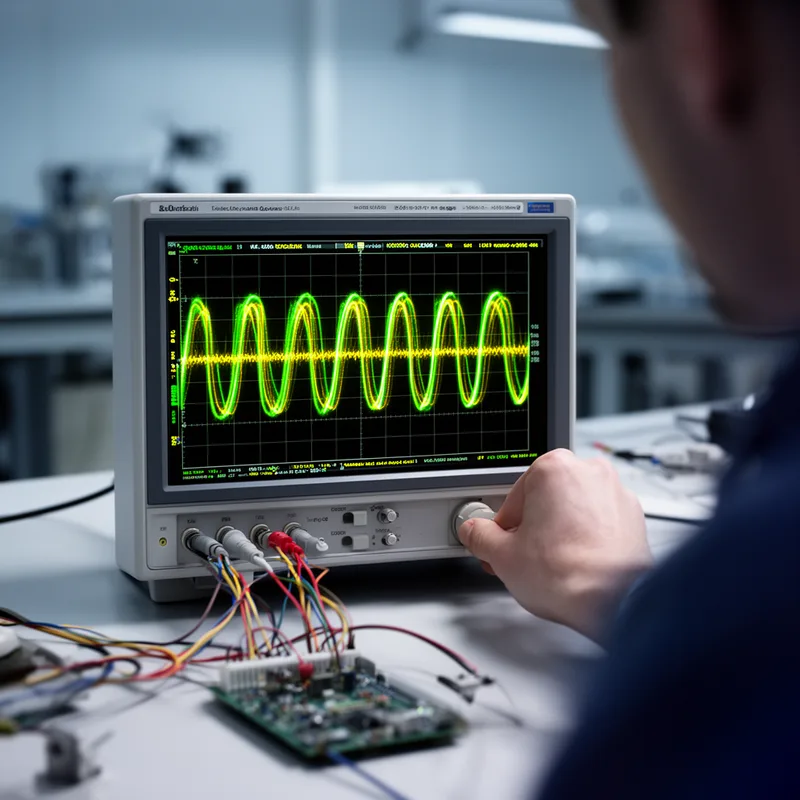
oscillograph
- noun
- /ˈɑsɪləˌgræf/
- Specialized
- The oscillograph showed a normal sine curve.
Examples
-
"Give it to me." Circumbright clipped leads from an oscillograph to the back of the tuner, dialed to the spy-beetle's carrier frequency.
Fiction book (1992) -
"He worked fifteen minutes, then suddenly the carrier wave on the face of the oscillograph vanished.
Fiction book (1992) -
The room was dark except for the dancing light of the oscillograph and the dull red murk from the infrared projector.
Fiction book (1992) -
The oscillograph displayed a clear waveform of the electrical signal.
-
Using the oscillograph, the engineer analyzed the fluctuations in voltage.
-
The scientist recorded the data on an oscillograph to study the wave patterns.
Synonyms
 39
7.9
39
7.9

An electronic tool that shows electrical signals on a screen
 5
8.7
5
8.7
A machine that shows electrical signals as lines on a screen


 1
8.4
1
8.4
A device that shows electrical signals as moving waves on a screen
An electronic device that shows changing electrical signals as lines on a screen using a tube
How Capable

Surface Forms
Morphology
oscillograph = oscillate (semi-transparent) = oscill + graph
The word is a technical formation built from an oscill- stem and '-graph' 'recording instrument', but the exact instrument sense is not fully predictable for an average learner.
Etymology
Oscillograph comes from Latin oscillare ('to swing') and -graph ('to write' or 'record'), the same -graph you see in autograph. So an oscillograph is a machine that 'records' the swinging or wave-like changes in electrical signals, letting people see fast changes in voltage.