
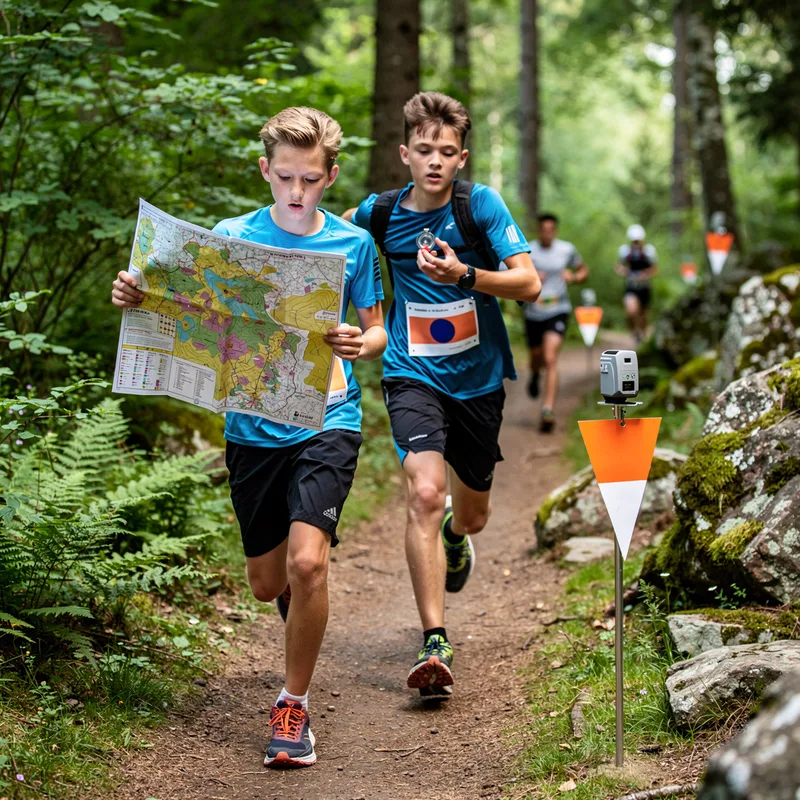
orienteering


 1
5.9
- noun
- /ˌɔːrɪənˈtɪrɪŋ/
- In orienteering, the relevant split between adults and "juniors" seems to be at age 21, not 18.
- orienteering terminology
- orienteering experience
- orienteering symbol
Loading YouTube…
Watch on YouTubeSo adventure racing, I was thinking orienteering possibly, although that that, you know, I say that really knowing very little about it.
- So adventure racing, I was thinking orienteering possibly, although that that, you know, I say that really knowing very little about it.
Examples
-
So our sort of focus when we were coming up with this was the orienteering Grand challenge.
-
As the orienteering courses become more difficult, two things change.
Academic text (2003) -
We are about to embark as a team on an orienteering adventure.
-
The orienteering symbols are more abstract than most of the geographic symbols taught in school.
Academic text (2003) -
An orienteering racer must go to all the locations that are marked on the map, in the order marked.
Academic text (2003) -
During the weekend, we participated in an orienteering event that required us to use maps to find our way through the forest.
-
To improve his skills, he joined an orienteering club that organizes races in various terrains.
-
She enjoys orienteering on hiking trips, using a compass to navigate through challenging landscapes.
How Fast
1
5.9

- Specialized
96
3.6
Surface Forms
Morphology
Etymology
Orienteering comes from orient, a word that first meant 'east' because the sun rises there and later came to mean 'to find direction'. The sport was named in Sweden for the idea of 'finding your way' with a map and compass, so orienteering is literally about finding direction quickly.