
organochlorine
 1
8.1
1
8.1

- noun
- /ɔrˌɡænəˈklɔrɪn/
- Specialized
- The other organochlorine compounds taken together totaled 0.45 ppm.
- organochlorine pesticide
- organochlorine compounds
- organochlorine pesticide residue
Examples
-
With the advent of synthetic insecticides in the mid-1940s, ground spraying of tsetse fly habitat with persistent organochlorines was introduced.
Academic text (1998) -
Farmers often use organochlorine pesticides to protect their crops from pests.
-
Organochlorine compounds have become widely distributed in our environment, following their introduction as pesticides during World War II.
Academic text (1993) -
The salmon, sampled from North and South America and Europe, were analyzed for 14 specific organochlorine toxins.
Academic text (2004) -
As insect pests developed resistance to DDT, a wide variety of organochlorine compounds were developed.
Academic text (1993) -
Organic substances and chlorine sometimes result in "significant concentrations of toxic organochlorine compounds," which may be carcinogenic.
Academic text (2000) -
Organochlorines were widely produced by the 1950s, but there was a lag before winds transported them north.
Academic text (2012) -
Average total organochlorine pesticide residue burden was 7.15 ppm.
Academic text (1993) -
DDT-type compounds were still the most abundant organochlorines in El Paso, followed by lower levels of lindane and heptachlor.
Academic text (1993) -
Research has shown that high levels of organochlorine compounds can affect wildlife health.
Surface Forms
Morphology
Etymology
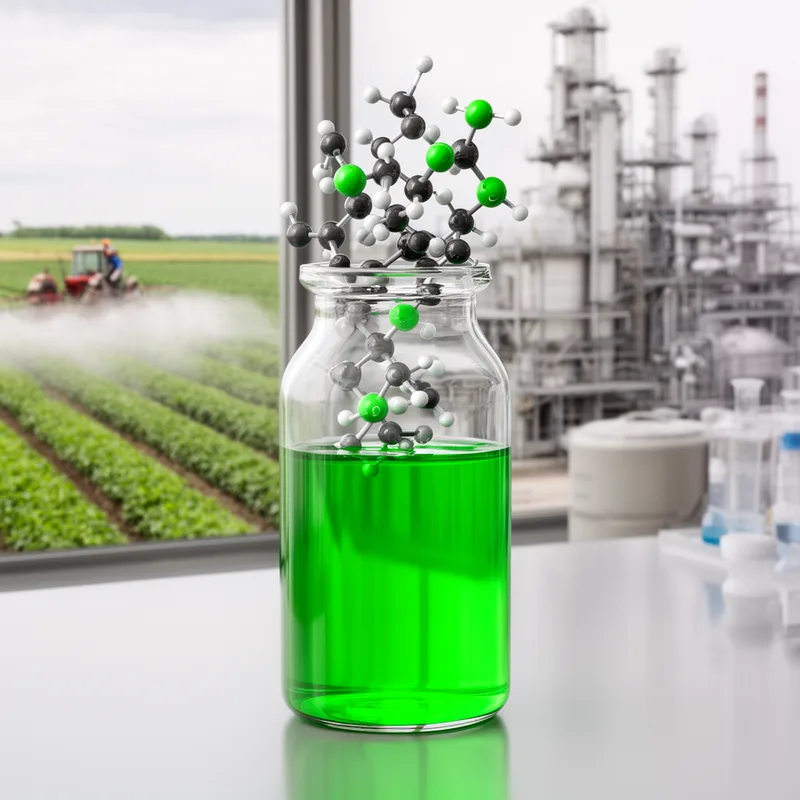
Organochlorine comes from the parts organo- meaning 'containing carbon', as in organic, and chloro- from a word for 'green' that gave the name chlorine. So an organochlorine is a chemical compound that contains both carbon and chlorine.