

organ of hearing
- noun
- Scientists are studying how the organ of hearing transmits sound waves to the brain.
Examples
-
Damage to the organ of hearing can result in permanent hearing loss.
-
Some animals have a highly developed organ of hearing that allows them to detect even the faintest sounds.
-
The organ of hearing is vital for communication.
-
Do you know where the organ of hearing is located?
-
The organ of hearing allows us to enjoy music and recognize voices.
-
When the organ of hearing is damaged, it can lead to hearing loss.
-
Doctors often examine the organ of hearing during a routine check-up.
Synonyms

 ∞
1.0
∞
1.0

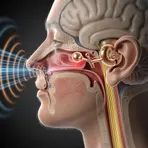
The part on the side of the head used for hearing
 1
3.9
1
3.9
Body parts like the ear and nerves that let you hear

The parts of the ear that receive sound and send it to the brain
Surface Forms
Morphology
The meaning is directly compositional: 'organ' (a bodily part performing a function) modified by 'of hearing' specifies that the organ performs the function of hearing, so a learner who knows the constituents can infer it refers to the body part responsible for detecting sound. This simple 'N of N' descriptive pattern is cross-linguistically common and appears in many English phrases (e.g., 'organ of sight'), making it readily understandable to a B1 learner.
Etymology
Organ of hearing comes from the simple image of an organ as a body part with a job and hearing as that job, so the phrase pictures a part that listens to sound. That's why it means 'the ear' or the parts that 'detect sound'.